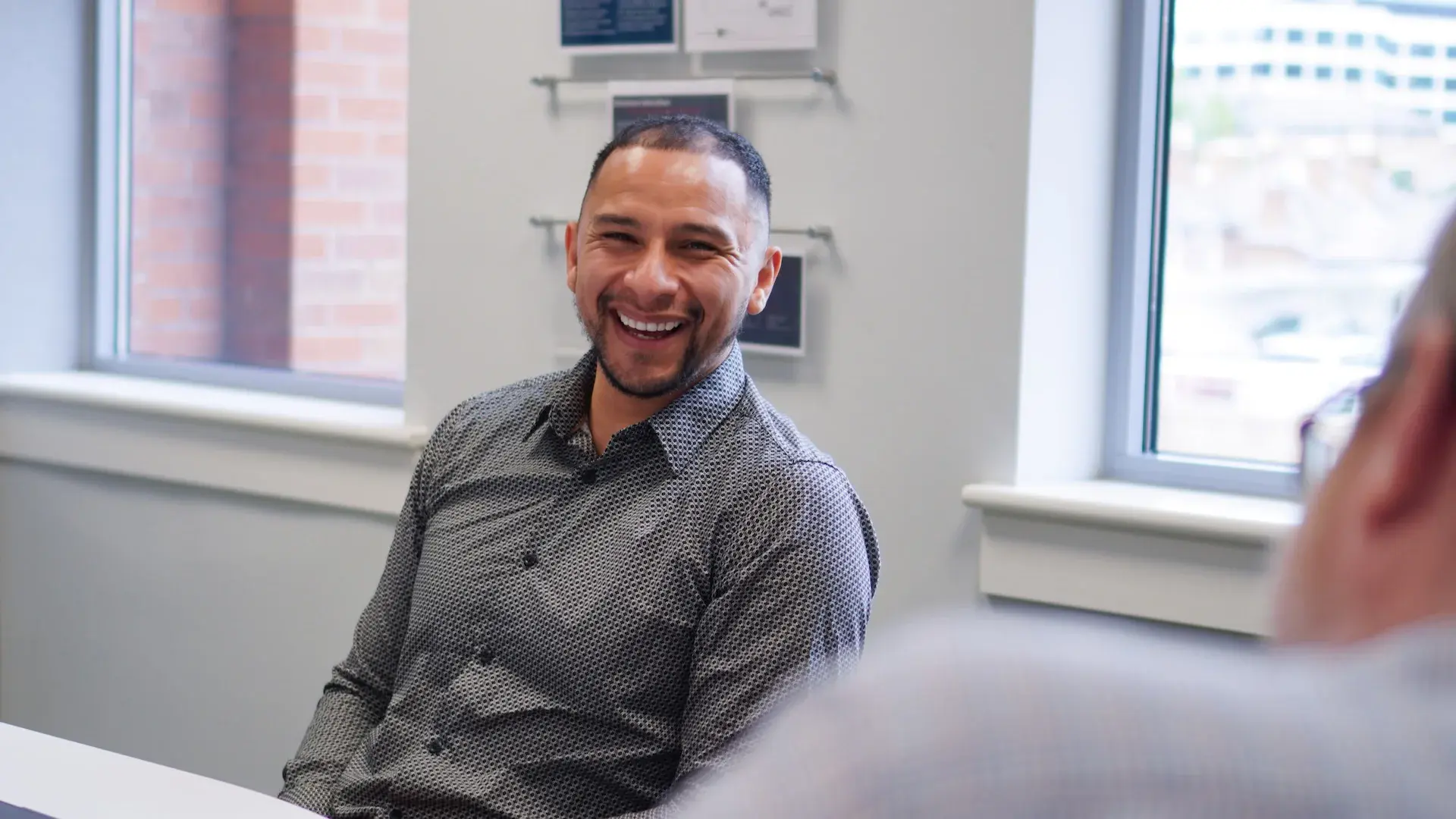
After six years of jumping out of aircraft with the 3rd Battalion Parachute Regiment and a specialist unit, Peter Alford knew how to adapt quickly. What he didn’t expect was the jolt of stepping into a world where no one cared whether he could organise a patrol. “You go from being the person people look to for direction, to someone who has to start at the bottom,” he says. “That takes some getting used to.”
Leaving a regimented life
Alford joined the Army at 24 and saw service in several theatres. By his late twenties, however, the father of two felt the nomadic lifestyle no longer suited the family he wanted to build. He also recognised that the physical demands of airborne soldiering would eventually take their toll. The prospect of a more stable career beckoned.
What he lacked, though, were the academic credentials many employers demand. “I left school with a Level 1 maths certificate and borderline English,” he says. “I wasn’t stupid, but the Army doesn’t require you to write essays.” This gap in his CV would prove to be one of his biggest hurdles.
 |
Get weekly jobs and transition advice. Unsubscribe anytime. |
First attempts and first knock‑backs
Alford gravitated towards project management. His stepfather, a chartered quantity surveyor, suggested he look at the construction sector. Through the veterans’ network BuildForce he identified Mace Consult as an employer that not only signed the Armed Forces Covenant but actively recruited service leavers.
His first application went nowhere. “I thought the military leadership thing would be enough, but it wasn’t,” he concedes. Instead of walking away, he arranged informal conversations with veterans already at Mace and asked what he was missing. The feedback was clear: he needed to translate his experience into language civilians understood and show he was committed to learning the technical side. A year later, armed with a sharper CV and a better understanding of the role, he applied again and this time secured an interview. In 2024, he started work as an assistant project manager.
Studying to close the gap
Getting a foot in the door did not solve the qualification problem. Alford enrolled on a Level 5 leadership and management diploma during his resettlement to prove he could study. Encouraged by that experience, he signed up – at his own expense – for a BSc in quantity surveying with the University of the Built Environment. “I needed to show I could handle the academic side and speak the same language as my colleagues,” he says.
Balancing study with a full‑time job and young children has been punishing. He rises at 5 a.m. to read course material before his toddler wakes up, squeezes in webinars between meetings and dives back into assignments once his children are in bed. “There are evenings when my brain just doesn’t work,” he admits. The university’s virtual learning environment, which includes recorded lectures and online forums, has been a lifeline. Online study also introduced him to peer support. “We’ve got WhatsApp groups for each module. It’s a safe space to say, ‘I don’t get this’. You realise you’re not the only one struggling.”
Learning new rules of engagement
Alford says some of his military habits have served him well. Years of airborne training taught him to stay calm under pressure and to focus on one objective at a time. In civilian life that translates into not over‑committing. “There’s a saying: if you chase all the rabbits, you catch none,” he explains. “I concentrate on doing one thing properly before moving on.”
Other habits needed recalibrating. “In the Army you give an order and people crack on. In project management you have to persuade, and you have to listen,” he observes. He sought guidance from senior colleagues on how to communicate without sounding like he was issuing commands. He also discovered that success in civvy street demands patience. “You might have been a platoon sergeant, but that doesn’t mean you walk straight into a management job. You have to earn your stripes again.”
Advice to those still in uniform
Alford is open about the sacrifices his transition has required. The family has tightened its budget to fund his studies. Leisure time has largely disappeared. There have been moments of doubt. But he believes the long‑term benefits outweigh the short‑term discomfort. His advice is grounded in experience:
- Prepare before you leave. Use resettlement programmes to gain civilian qualifications while you still have a steady income. Waiting until after you’ve left makes everything harder.
- Build a network early. Speak to veterans in the sectors you’re interested in. Ask them to critique your CV and be prepared to hear things you might not like.
- Expect to start again. Don’t assume your military rank will translate into an equivalent position. Be willing to prove yourself and learn from younger colleagues.
- Involve your family. Career changes affect everyone in the household. Discuss your plans and agree on the sacrifices you’re all prepared to make.
Today, Alford manages complex infrastructure projects and is midway through his degree. His workload is heavy and his schedule unforgiving, but he sees it as an investment. “The Army taught me to finish what I started,” he says. “There’s no glamour in what I’m doing now – it’s hard graft – but I know why I’m doing it. And that makes the early mornings and late nights worthwhile.”