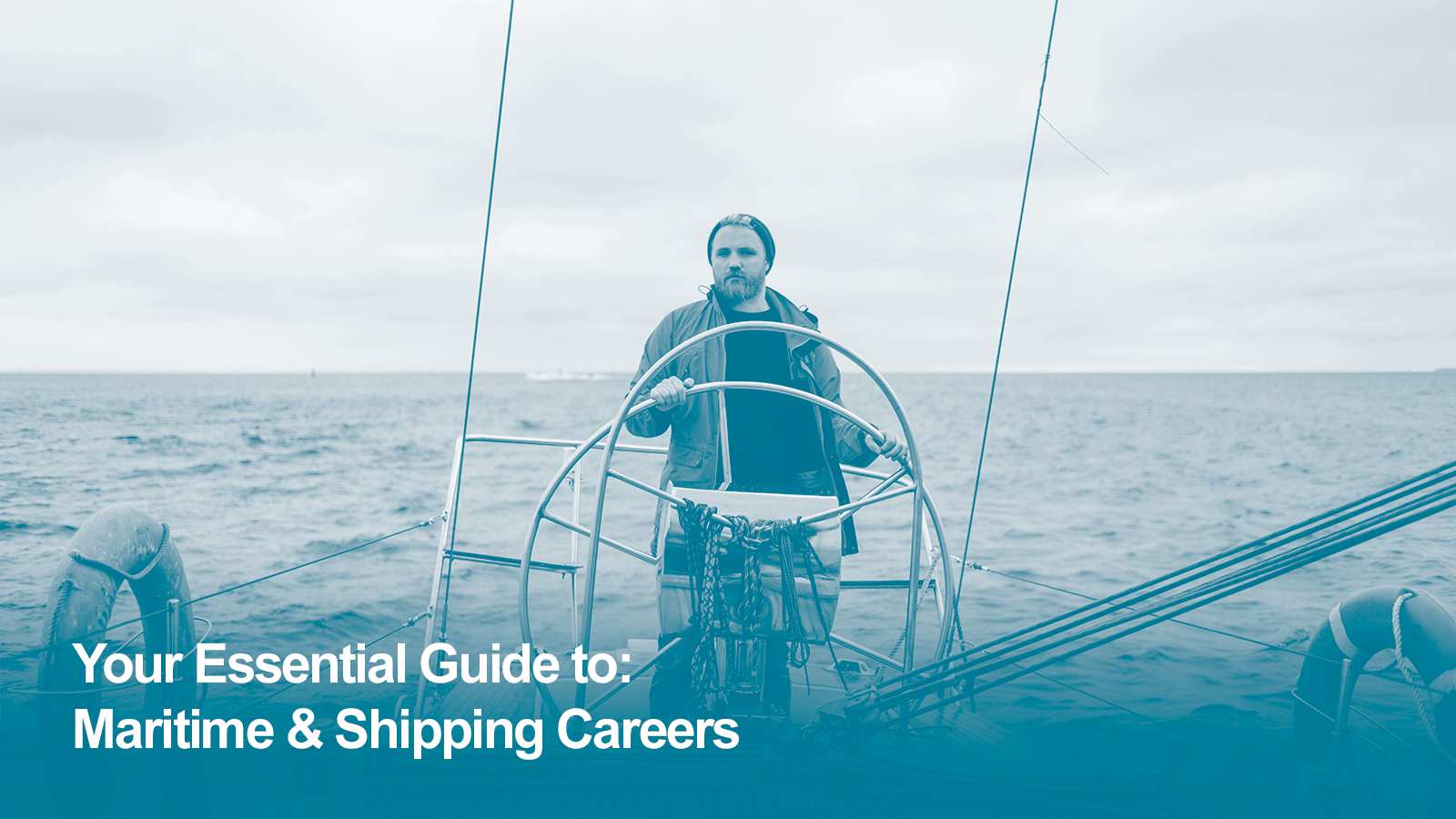
Maritime and shipping careers for veterans cover a wide range of roles: working at sea on merchant vessels, supporting port and harbour operations, managing shipping and logistics onshore, or operating in specialist areas such as marine engineering, maritime security and offshore energy. The UK maritime sector includes commercial shipping, ports, marine services, coastal safety, inland waterways, and a growing offshore renewables supply chain.
For many service leavers, this field is attractive because it rewards operational discipline, safety culture, teamwork and calm decision-making under pressure. Maritime employers often value people who can follow procedures, lead small teams, maintain standards on shift patterns, and operate safely in complex environments.
Typical employers include shipping companies and vessel operators, port authorities, marine engineering firms, offshore contractors, consultancies, government bodies and regulators, and charities involved in lifesaving and maritime safety. Work can be UK-based, international, shore-based or sea-going, and many roles involve shift work, on-call duties or rotational patterns.
 |
Get weekly jobs and transition advice. Unsubscribe anytime. |
Military backgrounds that can translate well include Royal Navy and Royal Marines (seamanship, engineering, operations, communications), RAF and Army logistics (movement control, supply chain, transport), REME/engineering trades, security roles, and anyone with strong health and safety exposure, permit-to-work discipline, or experience operating equipment in hazardous environments.
1) Main career routes within Maritime and Shipping professions
A. Sea-going deck and navigation pathway (merchant navy)
Type of roles: Navigation, watchkeeping, safety management and ship operations. This route suits people who want to work at sea and are comfortable with time away from home.
Typical job titles: Deck cadet, third officer, second officer, chief officer (first officer), master (captain), deck officer, navigation officer, boatswain/bosun, able seafarer.
Typical responsibilities: Passage planning and navigation, watchkeeping, ship safety and drills, cargo operations (depending on vessel type), stability and basic ship management, supervising deck crew, maintaining ship systems and documentation, compliance with maritime regulations.
Qualification/experience: Officer roles require structured training and certification (usually via cadetships and STCW-related tickets). Ratings roles may have lower entry requirements but still require safety training and medical standards.
B. Sea-going engineering and electro-technical pathway
Type of roles: Mechanical, electrical and systems engineering on board ships. Strong fit for ex-forces engineers and technicians.
Typical job titles: Engineering cadet, fourth/junior engineer, third engineer, second engineer, chief engineer, electro-technical officer (ETO), marine engineering technician.
Typical responsibilities: Maintenance and repair of propulsion systems, generators, pumps, HVAC, fuel systems, safety-critical equipment, planned maintenance routines, fault-finding, compliance and documentation, supporting safe operations and incident response.
Qualification/experience: Typically requires an approved training route and certification. Prior mechanical/electrical experience helps, but you still need the relevant maritime tickets to work as an officer.
C. Port, harbour and terminal operations pathway
Type of roles: Shore-based operational management: vessel movements, berth planning, port safety, cargo handling, and terminal performance.
Typical job titles: Port operative, stevedore, terminal operator, vessel traffic services (VTS) operator, port officer, port operations supervisor, port operations manager, harbour master, marina operations manager.
Typical responsibilities: Coordinating arrivals/departures, enforcing local port safety rules, managing contractors, shift and asset planning, incident response, liaison with pilots and tug operators, supporting audits and compliance, supervising cargo operations and equipment use.
Qualification/experience: Entry-level roles may be accessible with the right attitude and safety focus. Management and harbour authority roles typically require relevant operational experience plus additional certification and/or professional development.
D. Specialist safety, compliance and assurance pathway
Type of roles: Inspection, surveying, incident investigation, safety management systems, quality and regulatory compliance.
Typical job titles: Marine surveyor, port safety officer, HSSE adviser (marine/offshore), compliance officer, maritime auditor, incident investigator, ship superintendent (technical/operations).
Typical responsibilities: Inspections, audit preparation, risk assessment, assurance visits, reporting, safety case/management systems work, contractor controls, learning-from-incidents, liaising with regulators and classification bodies.
Qualification/experience: Often expects a blend of maritime/engineering/operations experience plus formal H&S or auditing credentials. Senior roles may require sea-going tickets or deep industry knowledge.
E. Offshore energy and subsea pathway
Type of roles: Work supporting offshore oil and gas (declining but still present), offshore wind (growing), subsea construction, inspection and maintenance.
Typical job titles: Offshore technician, offshore engineer, ROV technician (remotely operated vehicles), offshore operations supervisor, diving supervisor, commercial diver, marine coordinator.
Typical responsibilities: Safe offshore work execution, equipment maintenance, deck operations on support vessels, subsea operations support, adherence to permits-to-work, toolbox talks, emergency response readiness, working within strict safety management systems.
Qualification/experience: Often requires specific safety and offshore certifications, plus technical competence. Diving roles have stringent medical and training requirements and are not a “quick win” route.
F. Commercial and onshore shipping management pathway
Type of roles: Planning, chartering, broking, ship management, freight, documentation, and customer-facing operations.
Typical job titles: Shipping coordinator, ship manager, vessel operator, freight forwarder (marine), chartering assistant, shipbroker (entry roles exist), marine insurance/claims assistant.
Typical responsibilities: Voyage planning support, documentation and compliance, customer liaison, cost control, scheduling, coordinating agents and ports, managing service levels, handling exceptions and delays.
Qualification/experience: Often open to strong candidates without maritime tickets, particularly for coordinator and operations roles. Commercial roles may value numeracy, communication, and evidence of managing stakeholders.
2) Skills and qualifications required
Transferable military skills
- Leadership and teamwork: Maritime work is often small-team, high-trust. Experience leading teams, managing standards, and setting clear expectations transfers well—particularly into watchkeeping, port supervision, and offshore shift leadership.
- Operational planning: Passage planning, berth planning, maintenance planning and shift planning all mirror military operational planning: define the objective, understand constraints, brief clearly, and adapt when conditions change.
- Risk management: Dynamic risk assessment, permits-to-work, and safety-critical decision-making are central in ports and offshore. Employers look for evidence that you can challenge unsafe work and follow escalation routes.
- Discipline and reliability: Timekeeping, procedural compliance, accurate record-keeping, and consistency matter in regulated environments. This is often a differentiator for ex-military candidates in operational roles.
- Security awareness and clearance: Some maritime roles involve secure sites, restricted areas or sensitive infrastructure. While a clearance is not always directly transferable, security-minded behaviour and understanding of controlled access can be relevant.
- Technical and logistical expertise: Engineering, communications, vehicles, plant, fuels, and supply chain experience can map into marine engineering, terminal operations, and shipping coordination—especially where troubleshooting and continuity of operations are important.
Civilian qualifications and certifications
- Mandatory safety standards for sea-going work (STCW-related): Most sea-going roles require internationally recognised training aligned to STCW. This commonly includes basic safety training and a seafarer medical certificate. Officer pathways usually require a structured cadetship and certificates of competency.
- Merchant navy officer training (cadetships): For deck and engineering officers, cadetships are a common route. They combine sea time with college and lead to officer certification. This is a longer pathway, but it provides a clear ladder.
- Port and terminal tickets: Depending on role, you may need plant or lifting-related competence (for example, banksman/slinger, forklift, crane or specialist terminal equipment). Requirements vary by employer and site.
- Health & Safety qualifications: For safety, compliance and operational leadership roles, qualifications such as NEBOSH (or equivalent) can help, but are not always essential for entry-level jobs. Practical experience and credibility often matter most.
- Professional bodies and standards: Some roles engage with maritime professional frameworks (for example in marine engineering, surveying, ports, or logistics). Membership can be useful for networking and credibility, especially when moving into management or assurance roles.
- Offshore and marine-specific training: Offshore roles may require additional safety training specific to offshore environments and employer expectations. Diving and subsea roles require specialist training and medical standards; treat them as a dedicated career choice rather than an “add-on”.
- Degree requirements: Many operational roles do not require a degree. Degrees can be relevant for naval architecture, specialist engineering design, marine surveying pathways, and some commercial graduate schemes, but they are not the default requirement across the sector.
3) Salary expectations in the UK
Pay varies widely depending on whether you work at sea or ashore, the type of employer, and whether you are salaried, contracted, or paid a day rate. Sea-going roles may include accommodation and food while on board, which changes the real-world value of the package. Some international work can also have different tax and allowance arrangements depending on your circumstances.
Indicative UK salary bands
- Entry-level: Shore-based operational roles (for example port operatives, junior coordinators) often start in the mid-£20k to low-£30k range depending on location, shift patterns and overtime. Merchant navy officer “starter” salaries commonly begin around £30,000 once qualified, with cadet allowances during training. :contentReference[oaicite:0]{index=0}
- Mid-level: Experienced officer roles and operational management roles often move into the £35k–£60k band, sometimes higher with overtime, allowances, or specialist responsibilities. National Careers guidance indicates experienced merchant navy engineering officers can be around £80,000. :contentReference[oaicite:1]{index=1}
- Senior/leadership: Senior sea-going ranks can be significantly higher. Examples published for deck roles show second officer around £48,000, chief officer around £78,000 and master starting around £120,000+ (role and vessel dependent). :contentReference[oaicite:2]{index=2}
Other pay factors to understand
- Regional variation: Pay can be higher in locations with major ports and offshore supply chains, but living costs may also be higher. Shift allowances and overtime can make a substantial difference in ports and terminals.
- Public vs private sector: Public sector and harbour authority roles can offer strong pensions and stability, sometimes with lower headline salaries than high-pressure private sector roles.
- Contract vs permanent: Offshore and specialist technical roles may be day-rate based and can look high on paper, but income can be uneven and dependent on project demand.
- Harbour and port leadership: “Harbour master” pay varies by port size and responsibilities; UK estimates commonly sit in the mid-£30k to £60k+ range. :contentReference[oaicite:3]{index=3}
- Commercial diver and diving supervision: This is a specialist route with wide variation by type of diving, location and project. UK salary estimates for diving supervisor roles commonly sit around the £40k–£70k band, with higher outcomes reported in some cases. :contentReference[oaicite:4]{index=4}
4) Career progression
Maritime careers often have clearer progression than many industries, particularly sea-going officer routes where certification and sea time create defined steps. Shore-based routes can also progress well, but outcomes depend more on performance, operational credibility, and your ability to manage stakeholders.
- Typical ladder (sea-going deck): Cadet → third officer → second officer → chief officer → master. Progression is linked to sea time, assessments, and certification.
- Typical ladder (sea-going engineering): Cadet → junior/fourth engineer → third engineer → second engineer → chief engineer, with opportunities to specialise (for example ETO) depending on background and training.
- Typical ladder (ports/terminals): Operative → lead hand/supervisor → shift manager → operations manager → senior port leadership. Some people move laterally into safety/compliance or business improvement roles.
- Lateral moves: Common shifts include operational → safety/compliance, sea-going → ship management/superintendent roles ashore, ports → wider logistics/supply chain management, or offshore operations → project delivery roles.
- How long progression may take: Officer pathways can take several years due to training and sea-time requirements. Shore-based progression can be faster if you have strong operational credibility and take responsibility early, but it is more dependent on vacancies and employer structure.
- How veterans can accelerate progression: The most credible accelerators are (1) strong evidence of responsibility and decision-making, (2) a clear safety leadership track record, and (3) targeted qualifications that match the role (rather than collecting generic certificates). Pair this with a willingness to start at a realistic level and earn trust quickly.
5) Transitioning from the Armed Forces into civilian Maritime and Shipping roles
Translate rank into civilian job level
Do not assume that rank maps directly to seniority in a new industry. Instead, translate scope: size of team, size of budget/equipment, level of risk, and the outcomes you delivered. For example, a senior NCO with shift leadership and safety responsibility may be a strong fit for port supervision. An officer with complex planning and stakeholder management may fit shipping operations or compliance roles—if they can demonstrate commercial awareness.
Common mistakes in CVs
- Overuse of acronyms and unit language: Convert to plain English and explain what you did and why it mattered.
- Job titles that do not translate: Use a “civilian equivalent” in brackets (for example “Engineering Supervisor (Marine Systems)” rather than only the military title).
- Too much emphasis on duties, not outcomes: Add measurable outcomes: safety performance, downtime reduced, compliance achieved, turnaround times improved, inspections passed.
- Not tailoring to route: A CV aimed at sea-going officer training should emphasise suitability for structured training and life at sea. A port operations CV should emphasise shift work, safe operations, and teamwork with contractors.
Cultural differences to expect
- Commercial pace and priorities: Cost, time and customer impact are constant. Decisions often need a business rationale, not only “the correct process”.
- Less formal authority: Influence matters. You may need to lead through persuasion, data and relationships as much as through position.
- Different risk ownership: Safety is still critical, but accountability structures differ. Learn who owns what and how escalation works.
Networking approaches that work
- Use targeted conversations: Ask port and shipping professionals what they actually look for in entry hires, and what typical shifts and patterns are like.
- Join industry groups: Local maritime networks, port community groups, and professional bodies can be more valuable than generic job fairs.
- LinkedIn with purpose: Follow ports, shipping operators and marine service firms, then engage with operational posts (safety, training, technology, sustainability).
Using resettlement time effectively
- Pick a route early: “Maritime” is broad. Decide whether you are aiming for sea-going officer training, port operations, offshore, or shore-based shipping management.
- Close one or two key gaps: For example, basic maritime safety/medical for sea-going interest, or a targeted H&S ticket for operations leadership. Avoid doing too many unrelated courses.
- Get site exposure: If possible, arrange visits or work-shadowing in a port, terminal or marine services setting. This helps you decide quickly whether the environment suits you.
6) What to do at each resettlement stage
Awareness (24–18 months before leaving)
- Identify which route fits: sea-going, ports, offshore, compliance, or shipping operations.
- List your transferable evidence: safety responsibilities, engineering competence, leadership on shift, planning under pressure.
- Research basic entry requirements (medical, training expectations, travel/rota realities).
Planning (18–12 months before leaving)
- Start any longer-lead training if needed (for example officer cadetship applications or specific technical routes).
- Build a short target employer list: ports within commuting distance, shipping companies, offshore contractors, marine service firms.
- Speak to at least 5 people already doing the roles you want; adjust your plan based on what you learn.
Activation (12–6 months before leaving)
- Write a civilian CV and a route-specific version (ports vs offshore vs sea-going).
- Build a practical LinkedIn profile: skills, credentials, and a clear target role statement.
- Apply for roles that match your realistic entry point; focus on quality applications rather than volume.
Execution (6–0 months before leaving)
- Prepare for interviews using civilian examples (safety, teamwork, incident response, stakeholder management).
- Be clear on working patterns, travel expectations and contract terms before accepting an offer.
- Negotiate professionally: focus on total package (shift allowances, overtime rules, training support), not only base pay.
Integration (0–12 months after leaving)
- Learn the commercial context: what drives revenue, cost, performance and customer priorities in your employer.
- Ask for structured development goals and feedback early.
- Upskill based on your role (for example safety leadership, management training, specialist technical competence).
7) Is this career path right for you?
People who are likely to thrive
- You like operational environments with clear standards and safety expectations.
- You can work calmly with imperfect information and changing conditions (weather, schedules, mechanical issues).
- You are comfortable with shift work or rotational patterns and can plan your life around them.
- You take pride in doing the basics well: checks, logs, compliance, maintenance, and clear communication.
People who may struggle
- You strongly prefer routine office hours and predictable weeks (some shore roles offer this, but many do not).
- You dislike tight procedures, audits and regulated ways of working.
- You are not comfortable being away from home for extended periods (sea-going routes in particular).
- You want rapid seniority without doing time in role and building credibility in a new industry.
Key traits and preferences
- Practical problem-solving: Fault-finding, workaround thinking and systematic troubleshooting are valued.
- Clear communication: Especially during handovers, incidents, or when coordinating multiple teams.
- Personal resilience: Maritime work can be physically demanding, weather-affected, and schedule-driven.
- Professional humility: The best transitions happen when ex-military candidates bring confidence without trying to “out-rank” people in a new setting.
Conclusion
Maritime and shipping can offer service leavers, veterans and ex-military candidates a practical, standards-driven career with varied routes: at sea, in ports, offshore, or in shore-based shipping operations. The best outcomes come from choosing a clear pathway, filling only the most relevant gaps, and presenting your experience in plain English with evidence of safe, reliable delivery. If the working patterns and environment suit you, start exploring current opportunities now and speak to people already in the roles you are targeting.