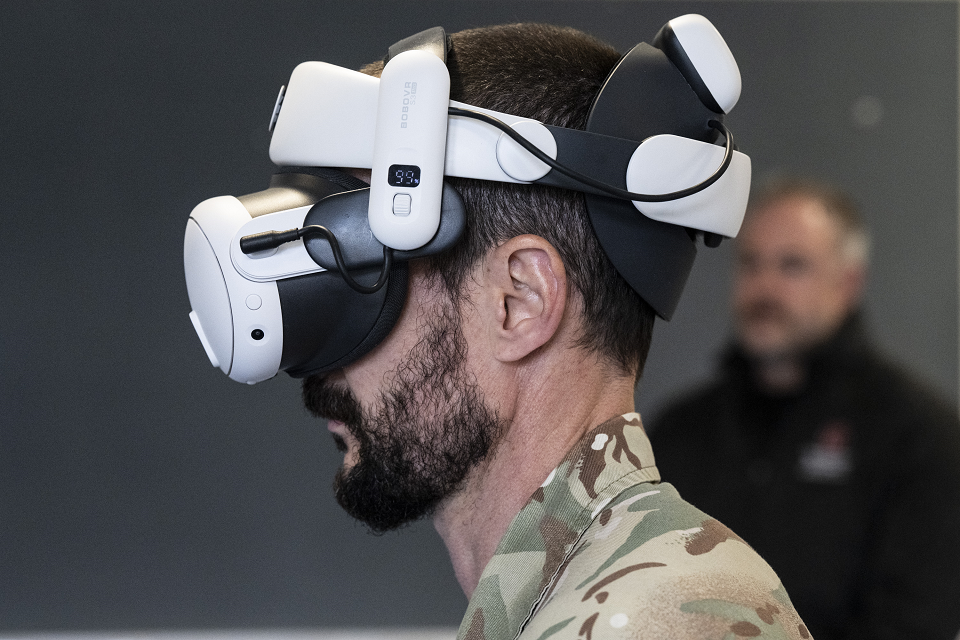
UK and US defence scientists have been testing how artificial intelligence could support military medics in high-pressure battlefield situations, focusing on whether personnel would trust AI to make life-and-death decisions.
The trials, led by the Defence Science and Technology Laboratory in collaboration with the Defense Advanced Research Projects Agency, explored how AI could be aligned with human decision-making in medical triage scenarios.
Conducted in October 2025 at military sites including Merville Barracks in Colchester and RAF Brize Norton, the research examined whether medics would be more willing to rely on AI systems that reflect their own judgement and priorities.
 |
Get weekly jobs and transition advice. Unsubscribe anytime. |
The study forms part of DARPA’s “In the Moment” programme, which investigates how aligning AI with individual human preferences could influence trust in high-risk environments.
Researchers tested participants in simulated mass casualty scenarios, using both desktop exercises and virtual reality. AI systems were designed to mirror the decision-making approach of a lead medic, either aligning with or differing from the participant’s own judgement.
Participants were then asked whether they would trust the AI sufficiently to delegate decisions, without initially being told the responses were generated by artificial intelligence.
The trials explored a range of ethical and practical factors that influence decision-making in combat medical situations, including whether to prioritise victims over attackers, how to weigh quality of life against survival chances, and whether personal or professional affiliations affect treatment decisions.
Early findings suggest that greater alignment between human and AI decision-making could increase confidence in delegating tasks, potentially allowing medics to triage and treat casualties more quickly in complex environments.
A spokesperson involved in the trials said the research is aimed at understanding how AI could support, rather than replace, human judgement, particularly as the volume of information available to personnel continues to grow.
The results will inform ongoing work into human-AI collaboration within defence, including how such systems could be deployed safely and effectively in future operations.