At 18, Clare Hearl walked into an Army recruiting office and began a decade‑long career that would take her to Cyprus, Kenya, Jordan, Sierra Leone and Northern Ireland.
She thrived in the discipline and camaraderie of the British Army, but adjusting to civilian life proved far harder. “I left the army in November 2007 and spent five years working for private security companies… I moved back to the UK… and a while later got my first job in the civilian world,” she recalled. Away from the structure of the military, she struggled to readjust and began experiencing confusion, isolation and symptoms she could not immediately identify as depression.
A hidden battle with the “black dog”
Like many service leavers, Hearl’s transition was complicated by mental‑health issues. She had unknowingly battled depression for years, and motherhood exposed how fragile her mental health had become. “By 2016, I was really struggling with everyday life… the turning point was when my little boy was three,” she said. Her mother visited and asked, “Where’s Mummy?”; the boy replied, “crying, Grandma”. The comment opened the floodgates, and Hearl finally admitted she needed help. A call to the veterans’ charity Combat Stress led to a diagnosis of post‑traumatic stress disorder (PTSD) and tailored residential treatment.
 |
Get weekly jobs and transition advice. Unsubscribe anytime. |
Hearl emphasises that acknowledging mental‑health problems early is not weakness but a necessary first step. She credits a short film shown at Combat Stress – “The Black Dog” – with helping her understand her illness: she and other veterans wept as they recognised themselves on screen. “I still have bad days and the black dog is a battle that will never be won – but it can be controlled”. Her advice? Pay attention to loved ones’ observations, seek help when things feel unmanageable and remember that treatment can be tailored around family and work commitments. For single parents or those in employment, Combat Stress can break residential programmes into shorter stays to make treatment more accessible.
Turning therapy into a mission
One of the most unexpected tools in Hearl’s recovery was art therapy. Initially sceptical – she had disliked art at school – she discovered during residential treatment that creative activities calmed her mind. “I got really engrossed in it. It was phenomenal and I spent every spare minute thinking what can I make?”. Drawing, painting and crafting offered a way to process emotions and provided a bridge to a new career. She encourages other veterans to explore therapeutic activities, even if they seem outside their comfort zone; art, horticulture or music therapy can uncover hidden talents.
Launching The Crafty Black Dog
Following treatment, Hearl began creating decorative glass bottles with lights and regimental badges. Unsure whether she could legally sell items featuring regimental insignia, she contacted the Ministry of Defence for permission – a step she advises other would‑be entrepreneurs not to skip. When permission was granted, she built a website and started selling her creations. In naming her business, she wanted to acknowledge the mental‑health journey that birthed it: the “Crafty Black Dog” refers both to the craft itself and to depression’s tendency to creep back unexpectedly.
Hearl ran the enterprise from her kitchen table for years, juggling parenting, part‑time work and a flood of orders. Marketing was initially organic; friends and other veterans spread the word. To grow, she partnered with a digital‑marketing agency that targeted advertisements at communities with strong military ties and highlighted products such as her military decanter range. Her campaigns produced a 159% increase in orders and a 146% rise in revenue between April – May and June – July 2023. Hearl cautions that scaling a niche business takes planning and the right partners: check that marketing agencies understand your market and that advertising spend remains affordable.
These gains allowed her to open a physical shop and employ staff. She emphasises the practical challenges of expansion: securing commercial property, negotiating rents and ensuring consistent stock. Veterans starting a business should investigate local enterprise hubs and small‑business grants, and ask charities such as the Royal British Legion or Veterans’ Foundation for advice on funding.
Entrepreneur of the Year
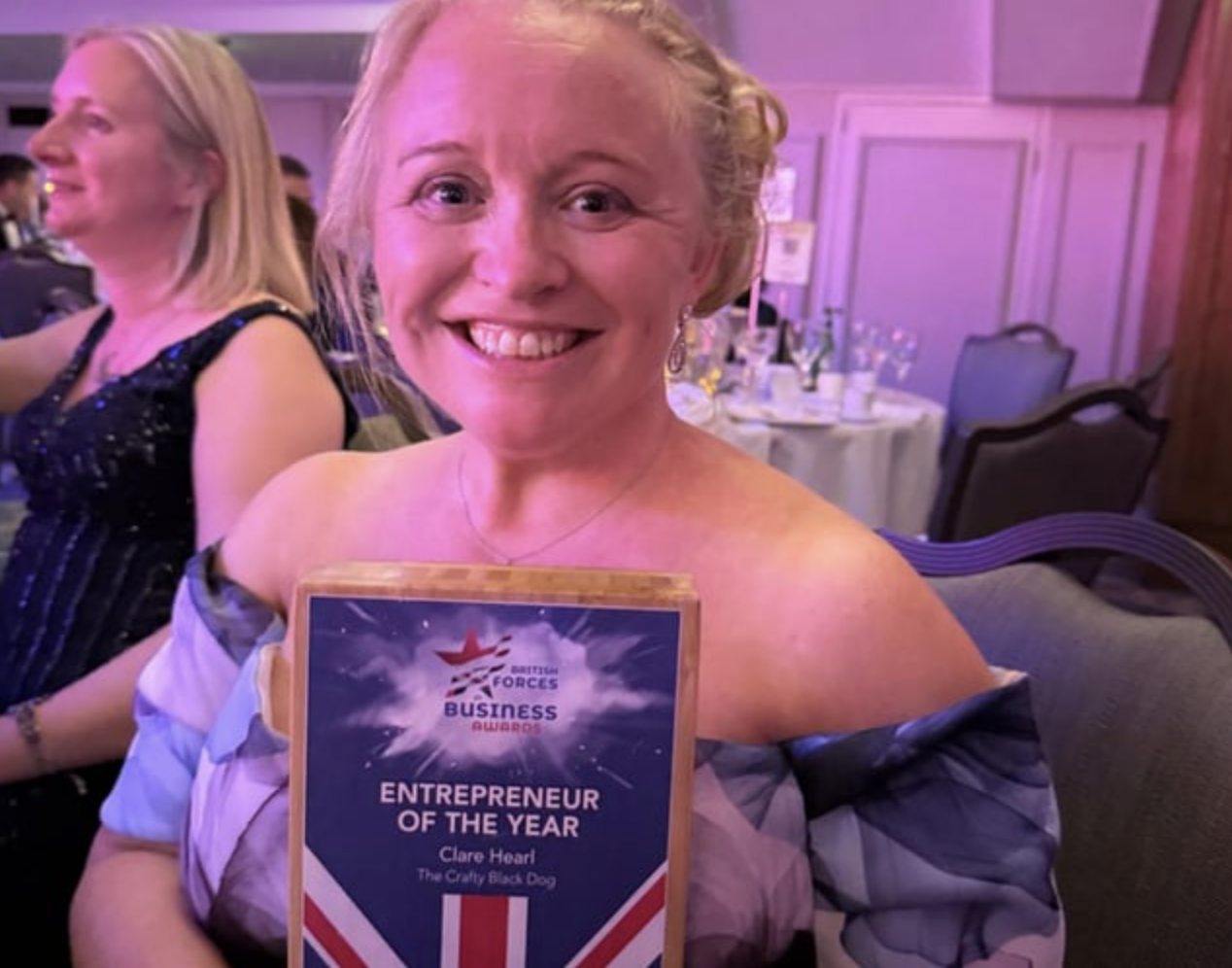
In July 2025, Hearl’s achievements were recognised when she won Entrepreneur of the Year at the British Forces in Business Awards, which celebrate ex‑military personnel who have excelled in civilian careers. While awards are gratifying, she stresses they are secondary to the daily satisfaction of being able to support her family, employ others and maintain control over her mental health.
For fellow veterans navigating resettlement, Hearl offers several pieces of practical advice:
- Acknowledge mental‑health challenges and seek help early. Depression, anxiety and PTSD are common after military service; charities such as Combat Stress and the NHS veteran mental‑health services provide confidential support.
- Explore therapeutic activities beyond your comfort zone. Art therapy unexpectedly became Hearl’s passion and business; other veterans may find similar solace in music, gardening, sports or writing.
- Build a network and ask for guidance. Organisations like the Royal British Legion, Veterans’ Gateway and local business hubs offer mentors, funding advice and networking opportunities. Hearl also credits her success to supportive family and veteran friends who tested products, shared social‑media posts and offered honest feedback.
- Start small, learn as you go and know when to scale. Hearl began selling items online from home. Only after demand outpaced her capacity did she invest in professional marketing and a physical shop. She recommends using digital platforms (Etsy, Shopify or a bespoke website) to test demand before committing to large overheads.
- Remember that success is not linear. Hearl still has difficult days and says the “black dog” never disappears. Sustaining a business while managing mental health requires realistic expectations, self‑care and sometimes putting well‑being before profits.
Moving forward
Clare Hearl’s journey underscores that resettlement is rarely straightforward. The discipline and resilience learned in uniform helped her confront post‑service challenges, but acknowledging vulnerability and seeking help were just as important. By turning therapy into a business, she has created a livelihood that honours her military past while confronting the realities of living with PTSD. Her story offers a roadmap for other veterans: embrace support, explore new skills, be patient with yourself and remember that a thriving civilian life is possible – even if the route there looks very different from the structured world of the Armed Forces.