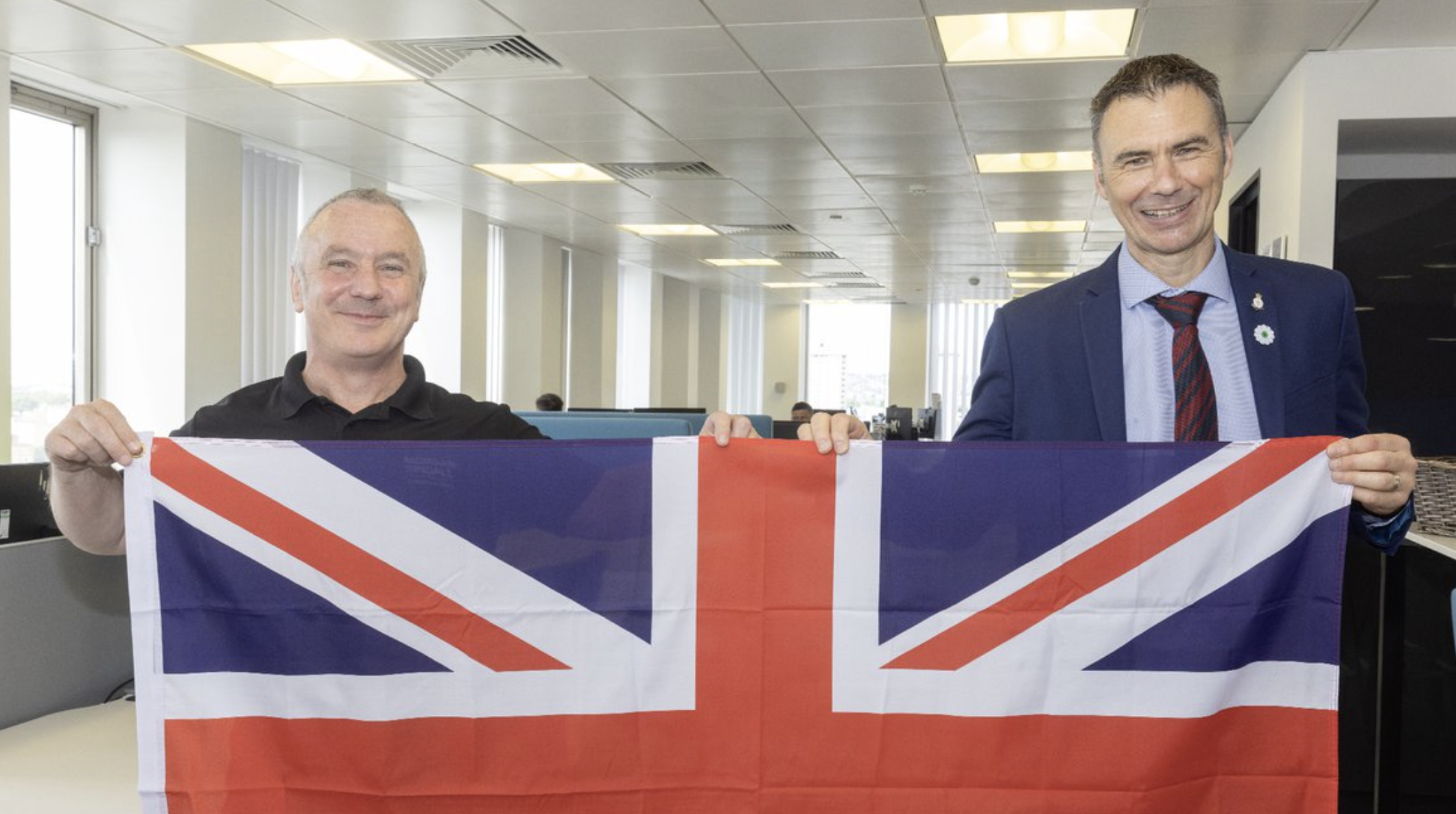
When Andrew Waddington walked out of the Royal Engineers in 2007, he knew how to build bridges in a war zone and run a platoon under fire. He had spent nearly two decades designing and constructing bases, roads and infrastructure in Afghanistan, Iraq, Bosnia and Sierra Leone. What he didn’t know, by his own admission, was how to fit a lift or install a curtain wall.
“I started as a senior site manager at Barrett Homes London and delivered a 242‑unit residential job in Feltham,” he says. “Coming out of the military there’s always gaps in your knowledge because they don’t do curtain walling, lifts, or tower cranes.” Learning quickly that military experience doesn’t translate neatly into civilian construction, he spent those early months asking questions, shadowing colleagues and filling those gaps.
A steep learning curve
Waddington joined the Army Apprentices College at 16 and later completed specialist design courses at the Royal School of Military Engineering. In uniform, he learned to solve problems at speed under pressure. But the civilian world has its own pace and language. “I had no idea what design management was about,” he recalls.
 |
Get weekly jobs and transition advice. Unsubscribe anytime. |
After leaving Barrett Homes he spent six years with BAM as a design manager, a role he’d never heard of until he saw the job advertised. The move meant learning how to coordinate architects, engineers and contractors on complex projects while grappling with commercial realities he’d never encountered in the forces.
That humility – admitting what you don’t know and asking for help – underpinned his transition. Instead of trying to coast on his rank, he accepted that he was starting over. He also discovered that some things he took for granted in the military were highly prized outside it: the ability to make decisions under pressure, to manage risk, and to keep a team moving in the same direction.
“In the forces, you’re often put into situations that really test you,” he says. “There’s no more pressure than going into a conflict zone where people are trying to kill you. The skills used in these situations, such as quick thinking, risk assessing and problem solving, are all useful in your second career too.”
Driving change from inside
By 2020, Waddington had moved into Morgan Sindall Construction as head of design for London and the Home Counties. He didn’t just hide in the design office. Drawing on his own bumpy journey, he pushed the company to make life easier for the next cohort of veterans. He championed Morgan Sindall’s Armed Forces Covenant work, which gives reservists extra paid leave each year and pairs service leavers with mentors.
“We’re part of the Armed Forces Covenant… Morgan Sindall Construction gives ten days additional paid leave a year so that reservists can go on their annual training camp without having to sacrifice salary or valuable family time,” he explains. He also helped set up an internal armed‑forces network to match newcomers with people who had already made the transition.
What he wishes he’d known
Waddington doesn’t sugar‑coat the process. He says many veterans come out expecting to slot straight into project management roles because that’s where they were in the Army. In his view, that’s a mistake. “A lot of people coming out of the military want to be project managers because they think that’s the level to come in at. “But you also need to fill those scope gaps as a project manager… It’s not always coming across at the same level you’re at in the military,” he cautions. Sometimes you have to take a step back, learn the civilian way of doing things and then climb again.
His other key lesson is to do your homework before you leave. “The construction industry is huge and there are many varied roles,” he says. “Anything from document control, to HR, to environmental roles to IT and quantity surveying… So don’t just rule the construction industry out. It’s not just all about building. Consider what you want to do within construction.” He urges service leavers to research the roles on offer, talk to people in the industry and understand what qualifications they’ll need.
Finally, Waddington wants veterans to recognise their own worth while remaining realistic. The Army may have been a complete career in itself, but leaving it means starting a second one. “When you’re moving into whatever industry you go to, it is a second career. You’ve got lots to give, be confident in your skill set, don’t undersell yourself,” he says. In other words, be prepared to learn – but don’t forget what you already know.
Lessons from his journey
Veterans looking at construction can take several lessons from Waddington’s experience. Expect to retrain; even after two decades in military engineering, he had to relearn the basics of commercial construction and accept a lower‑level role while he did so. Ask for help; he credits colleagues and mentors for getting him through the first year out of uniform and believes it’s better to admit ignorance than to bluff. Look beyond obvious roles; the industry is bigger than project management, so research different disciplines and be honest about your interests and weaknesses. Use your military edge; skills such as risk management, planning, teamwork and calm under pressure are valuable, but only if you can translate them into civilian language. And seek out supportive employers; companies that sign the Armed Forces Covenant or work with veterans’ organisations are more likely to understand your needs, provide flexible leave for reservist duties and offer mentorship.
By confronting the uncomfortable parts of his own transition and using them to change how his employer treats ex‑military recruits, Andrew Waddington shows that a second career in construction is possible – if you’re willing to start over, keep learning and speak up when things aren’t working.