1. Introduction
Fitness, sport and outdoor activity roles in the UK range from gym-based personal training and group exercise, through to coaching, community sport development and outdoor instruction (including adventure training and outdoor education). The sector is a mix of public and private provision: leisure trusts and local authorities, commercial gyms, schools and colleges, professional and grassroots clubs, outdoor centres, and charities delivering sport-for-development programmes.
This career area can suit service leavers, veterans and ex-military personnel who want practical, people-facing work with clear standards around safety, preparation and professionalism. Many roles reward consistent delivery, calm decision-making, and the ability to motivate others over long periods—traits that translate well from military environments.
Typical working environments include leisure centres, fitness clubs, schools and academies, community settings, sports clubs, outdoor education centres, and expedition-style work in the UK and abroad (seasonal in some outdoor disciplines). It is common to work evenings and weekends, particularly in coaching and gym roles.
 |
Get weekly jobs and transition advice. Unsubscribe anytime. |
Military backgrounds that often transition well include: physical training staff (PTIs), training team roles, adventure training and AT-qualified personnel, unit welfare and development roles, medics interested in rehabilitation or exercise referral pathways, and logistics/operations personnel moving into centre management and operations. Your route will depend on whether you want a coaching/instruction role, a health-and-fitness pathway, or to move into programme or centre leadership.
2. Main Career Routes Within Fitness, Sport & Outdoor Activities professions
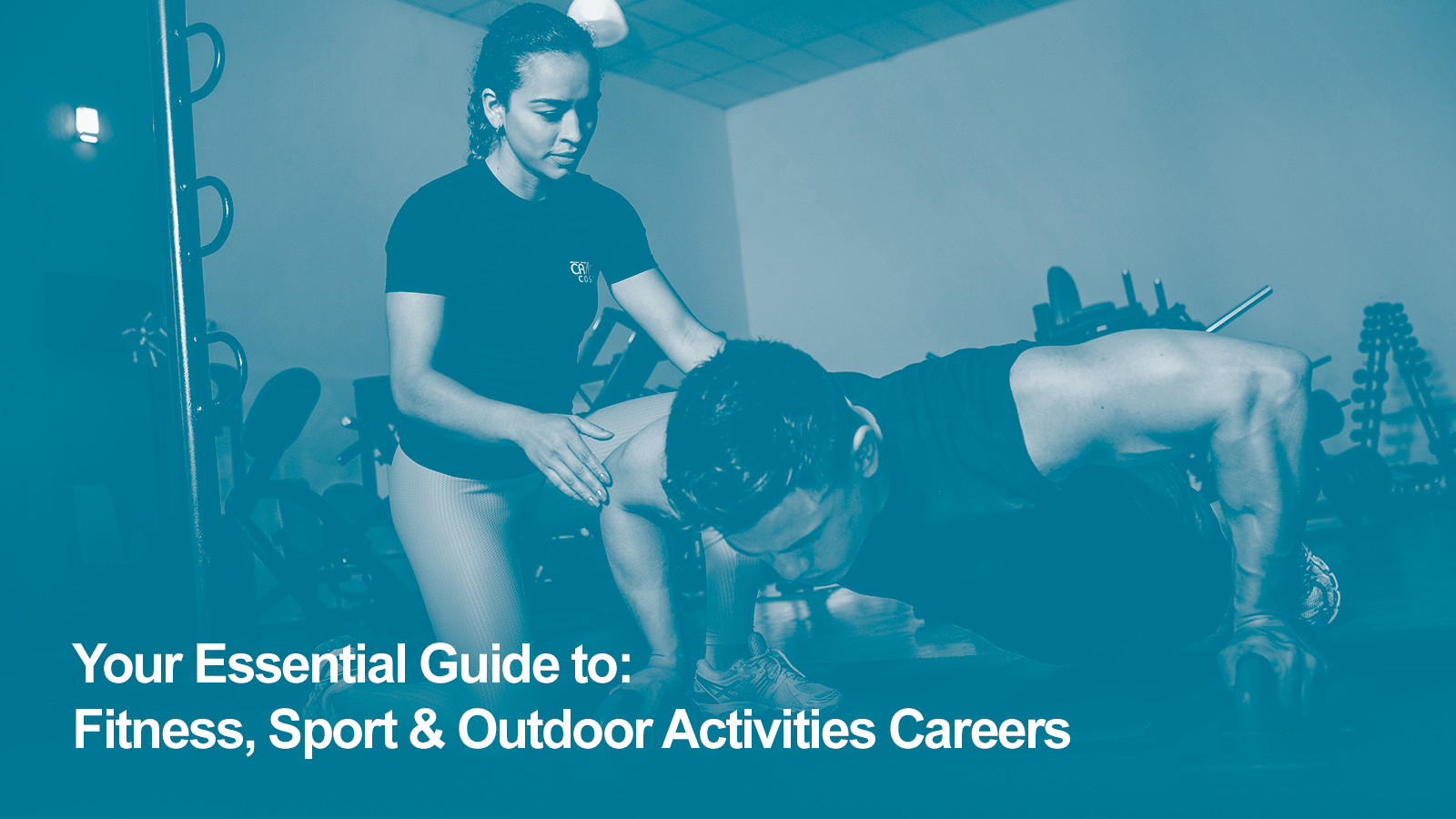
A) Fitness delivery and client coaching (gym and studio)
Role type: Direct delivery of fitness sessions to individuals or groups, often with a commercial focus on member retention and client outcomes.
Examples of job titles: Fitness Instructor, Gym Instructor, Personal Trainer, Group Exercise Instructor, Strength & Conditioning Coach (entry level), Exercise Referral Instructor (with additional training), Studio Manager.
Typical responsibilities: Inductions and programme design; delivering sessions; coaching technique; managing risk and safety; basic client screening; tracking progress; supporting member experience; (for PTs) client acquisition and retention.
Typical entry requirements: Usually Level 2/3 fitness qualifications are expected by employers, and professional alignment with recognised standards is increasingly valued. CIMSPA professional standards are widely referenced in the UK fitness workforce.
B) Sports coaching and performance support (community to performance)
Role type: Coaching athletes or participants across grassroots, school, club, academy and performance settings, sometimes combined with safeguarding and volunteer management.
Examples of job titles: Sports Coach, Football/Rugby/Swimming Coach, Athletics Coach, Community Coach, Academy Coach, Sports Coordinator, Talent Pathway Coach, Coach Developer.
Typical responsibilities: Session planning and delivery; skill development; match/event support; safeguarding; communication with parents and stakeholders; supporting progression pathways; managing assistants/volunteers.
Typical entry requirements: National Governing Body (NGB) coaching awards are usually the main route, often aligned with UK Coaching guidance.
C) Outdoor instruction and adventure training (centre-based and freelance)
Role type: Leading groups safely in outdoor environments and teaching technical skills (e.g., navigation, paddlesport, climbing, mountain walking, sailing). Work can be seasonal and may include residential contracts.
Examples of job titles: Outdoor Activities Instructor, Activity Instructor, Climbing Instructor, Kayak/Canoe Coach, Mountain Leader, Expedition Leader, Sailing Instructor, Ski Instructor, Outdoor Education Instructor.
Typical responsibilities: Risk assessment and safety management; route planning; group supervision; instruction and coaching; weather/route judgement; safeguarding (when working with young people); incident response and emergency procedures.
Typical entry requirements: NGB qualifications and scheme-based awards are common. For hill and mountain walking leadership, Mountain Training’s Mountain Leader pathway is a widely recognised UK route with defined prerequisites and logged experience requirements.
D) Leisure, sport and outdoor operations and leadership
Role type: Managing people, budgets, facilities, programmes and compliance across leisure centres, outdoor centres, clubs or multi-site operators.
Examples of job titles: Leisure Centre Manager, Gym Manager, Operations Manager (Leisure), Duty Manager, Sports Development Manager, Outdoor Centre Manager, Programme Manager.
Typical responsibilities: Staffing and rotas; customer service and delivery standards; health & safety and compliance; supplier management; budgets and utilisation; programme planning; partnerships with councils, schools and NGBs.
Typical entry requirements: Experience matters heavily (team leadership, operations, compliance). Qualifications help, but strong evidence of managing people and risk is often what gets you shortlisted.
E) Specialist and clinical-adjacent pathways (with additional training)
Role type: Roles that sit closer to health, rehabilitation or performance science, often requiring further study and/or supervised practice.
Examples of job titles: Sports Therapist (regulated differently from physiotherapy), Strength & Conditioning Coach (advanced), Sport and Exercise Scientist (support roles), Performance Analyst (sport), Exercise Referral (specialist delivery).
Typical responsibilities: Injury prevention support; performance programming; testing and monitoring; applied sport science support; working within scope of practice and referral pathways.
Typical entry requirements: Degree or equivalent plus professional development and, in many cases, accreditation routes. For sport and exercise science, bodies such as CASES set accreditation and quality frameworks.
3. Skills and Qualifications Required
Transferable Military Skills
Leadership. Coaching and instruction are leadership roles in civilian clothing. Employers want people who can set standards, build confidence, and manage mixed-ability groups without drama. If you’ve led training, delivered briefs, or mentored juniors, translate that into “coached, instructed, supervised, assessed and improved performance”.
Operational planning. Session plans, training blocks, periodisation, expedition plans and centre programmes all rely on planning, sequencing, and contingency thinking. Your experience of planning and delivering against constraints is directly relevant.
Risk management. This is central in outdoor instruction and still important in gyms and coaching (screening, safe progressions, safeguarding, incident reporting). Outdoor employers in particular want evidence you understand dynamic risk and group safety.
Discipline and reliability. Many organisations struggle with consistency in delivery and punctuality. Turning up, doing the basics well, documenting properly, and modelling professional behaviour is a genuine advantage.
Security clearance (when relevant). It is not a core requirement for most fitness roles. However, it can be relevant for certain defence-related fitness contracts, secure sites, or coaching/instruction roles delivered within MoD environments.
Technical or logistical expertise. If you’ve run stores, transport, equipment maintenance or training areas, that can translate into leisure/outdoor operations and duty management. Link this to compliance, asset control, scheduling, and customer-facing operations.
Civilian Qualifications and Certifications
Fitness instruction and personal training. Employers typically expect recognised Level 2/3 qualifications for gym roles. For professional alignment in the UK, CIMSPA standards are a common reference point for role scope and competence expectations.
Coaching qualifications (sport-specific). Most sports use NGB coaching awards, often aligned with UK Coaching’s qualification guidance and learning frameworks. If you want paid coaching work, prioritise the NGB pathway in your chosen sport.
Outdoor qualifications. Common UK routes include Mountain Training awards (e.g., Mountain Leader) and discipline-specific awards (paddlesport, sailing, climbing, snowsports). Entry is often experience-led: you build logged days, then train and assess.
Safeguarding and DBS. If you work with children or vulnerable adults, safeguarding training and an enhanced DBS check are frequently required (often arranged by the employer, but you should be prepared). Build this into your plan early.
First aid. A suitable first aid qualification is commonly expected in outdoor roles and is widely valued in leisure operations. Choose a course that matches your likely environment (e.g., outdoor first aid for remote settings).
Funding and retraining routes. Service leavers can use resettlement support, including the Career Transition Partnership (CTP), and may be eligible for Enhanced Learning Credits (ELC) for higher-level learning (Level 3+ with approved providers).
When degrees matter. For sport science, performance roles and some specialist pathways, degrees (or equivalent) are often expected. For many coaching, fitness and outdoor instruction roles, experience plus the right awards can be a more direct route than university.
4. Salary Expectations in the UK
Salaries vary significantly depending on whether you are employed, self-employed, working freelance/seasonal, or paid per session. Pay also changes by region, employer type and how commercial the role is (e.g., gym PT revenue versus salaried leisure roles).
- Entry-level (indicative):
- Fitness instructor roles are commonly shown as around £17,000 to £27,000 in National Careers Service data. :contentReference[oaicite:8]{index=8}
- Sports coach roles are commonly shown as around £19,000 to £28,000.
- Outdoor activities instructor roles are commonly shown as around £23,000 to £30,000.
- Mid-level (indicative): Expect modest salary growth in salaried delivery roles unless you move into supervision, management, performance pathways, or a strong self-employed client base. Many experienced coaches/instructors increase earnings by combining delivery with coordination, education, or multi-disciplinary work.
- Senior/leadership (indicative): Leisure centre manager roles are commonly shown as around £24,000 to £36,000 in National Careers Service data, with higher pay more likely in larger multi-site operators or specialist operations roles.
Regional variation: London and the South East can pay more, but costs and competition are also higher. Outdoor roles in national park areas may include seasonal patterns and, occasionally, accommodation elements (which affects take-home value).
Public vs private sector: Public leisure roles can offer stability, pensions and structured progression, but may pay less than top-end commercial roles. Private gyms can pay modest basic salaries for instructors but offer better upside for strong PTs via client fees.
Contract vs permanent: Outdoor and coaching work can be seasonal or sessional. Freelance day rates can look attractive, but you must account for travel, insurance, cancellations, and non-working days.
5. Career Progression
Typical ladder. Many people start in delivery (assistant instructor, fitness instructor, junior coach), then move to senior instructor/lead coach, then to coordination/management (duty manager, programme lead, head coach, centre manager). In gyms, a common progression is instructor → PT → lead PT / studio lead → gym/club manager.
How long progression may take. In fitness and leisure, progression to supervisor level can happen within 12–24 months if you combine strong delivery with reliability and basic operational competence. Outdoor pathways are often experience-gated: you build logged days, then add awards, then broaden your remit over time.
Lateral moves. A realistic lateral move is delivery → operations (e.g., leisure duty management) or delivery → development (community sport, sports development, workforce development). Another common move is operational delivery → training/education (tutor, assessor) once you have credibility and experience.
How veterans can accelerate progression. You can progress faster by being deliberate about your “portfolio”: build evidence of results (attendance, retention, safety record, programme outcomes), not just hours worked. Combine that with one or two targeted qualifications that match the job you want next, rather than collecting certificates without a plan.
6. Transitioning from the Armed Forces into civilian Fitness, Sport & Outdoor Activities roles
Translate rank into civilian job level. Focus on scope and outcomes, not rank. A SNCO who ran training delivery and managed risk could match well to duty management, programme lead, or senior instructor roles. A junior leader with strong delivery capability may be best positioned for instructor/coach roles with clear progression.
Common mistakes in CVs. The biggest issue is over-weighting “duties” and under-weighting measurable outcomes. Replace military acronyms with plain English. Show evidence: number of people trained, safety record, programmes delivered, equipment budgets managed, incident-free periods, retention improvements, or performance gains.
Cultural differences. Civilian organisations often expect you to ask for what you need (support, mentoring, clarity) rather than waiting for a system to provide it. You may also find less tolerance for direct communication styles in customer-facing environments—adjust tone without lowering standards.
Networking approaches. For coaching and outdoor work, networks matter. Join NGB communities, volunteer at clubs, and attend CPD events. For fitness, build relationships with gym managers and local wellness networks. Online networking is useful, but in these professions, “known and trusted” often beats “applied and unknown”.
Use resettlement time effectively. Use CTP and related support to map roles and training routes, then target one pathway. If you’re aiming at outdoor qualifications, start logging quality days early. If you’re aiming at coaching, get into a club environment and begin supervised delivery alongside the formal qualification route.
7. What To Do at Each Resettlement Stage
- Awareness (24–18 months before leaving): Decide which pathway you want (fitness, sport coaching, outdoor instruction, or management). Identify qualification gaps and the realistic working pattern (evenings/weekends, seasonal work, self-employed risk). Explore official transition support routes on GOV.UK.
- Planning (18–12 months before leaving): Start the right core qualification (e.g., Level 2/3 fitness or the relevant NGB coaching award). If outdoor, begin structured logging of quality days and get basic first aid/safeguarding lined up.
- Activation (12–6 months before leaving): Build evidence and credibility: supervised coaching hours, assistant instructor work, volunteering, or weekend delivery. Update CV and LinkedIn with civilian language and outcomes. Engage with CTP and employer events where relevant.
- Execution (6–0 months before leaving): Apply for roles and be clear about the employment model you want (employed versus self-employed). Prepare for interviews by explaining how you manage risk, customer expectations and delivery quality in plain English.
- Integration (0–12 months after leaving): Stabilise income first, then add targeted CPD. Ask for feedback, track outcomes, and build a reputation. If you want management, volunteer for rota planning, duty shifts, compliance tasks, and small improvement projects that demonstrate readiness.
8. Is This Career Path Right for You?
Who is likely to thrive: People who enjoy daily interaction, coaching and motivating others; those who can maintain high standards without being rigid; people comfortable with variable hours; and those who are willing to keep learning and updating skills. Outdoor roles suit those who enjoy responsibility, judgement, and practical risk management in changing conditions.
Who may struggle: If you need predictable hours every week, dislike customer-facing work, or want rapid salary growth without moving into commercial/self-employed models or leadership, this sector can feel limiting. Outdoor pathways can also frustrate those who do not enjoy the “time-served” nature of building logged experience and awards.
Key traits and preferences: Patience, consistency, strong personal standards, and an ability to explain and demonstrate skills clearly. The best instructors and coaches are calm, organised, and good at building trust—especially with beginners and anxious participants.
If you are considering fitness, sport or outdoor work after service, start by choosing one clear route, then build a simple plan: gain the minimum viable qualification, build credible experience, and use your military strengths (planning, risk management and leadership) as your differentiator. When you are ready, explore current opportunities via your chosen employers, leisure operators, clubs and centres, and the wider resettlement support available to you.
Related Pathfinder guides (internal links):
- Fitness, Sport & Outdoor Activities career hub
- Fitness, Sport & Outdoor Activities: essential careers guide
- Education & Training careers guide (useful if you want to become an instructor/tutor)
- Health & Safety careers guide (relevant for leisure/outdoor compliance and operations)
- Facilities & Property careers guide (relevant for site/operations management routes)
- Charity & Voluntary Sector careers guide (relevant for sport-for-development roles)
- NHS & Healthcare careers guide (relevant for rehabilitation-adjacent interests)