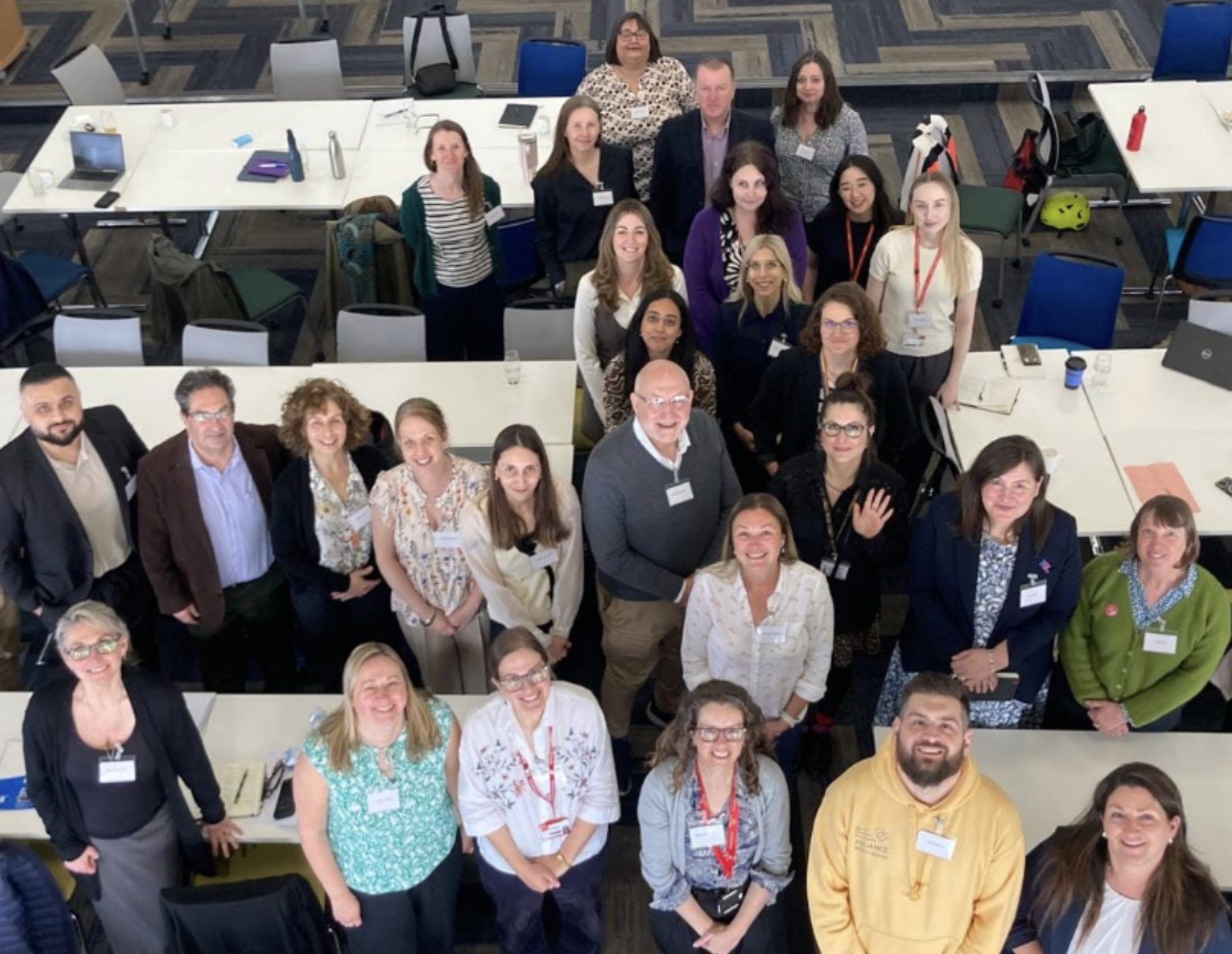
Military families must be more consistently included in research, policy making and support services, according to reflections from the 2026 KCMHR-CIMVHR Military Families Day International Roundtable.
The 11th Military Families Invitational Roundtable was held on 12 May by the King’s Centre for Military Health Research, in collaboration with the Canadian Institute for Military and Veterans Health Research.
The event brought together researchers, support providers and policy makers to discuss how military families can be better represented in research, policy and service design.
 |
Get weekly jobs and transition advice. Unsubscribe anytime. |
The authors said that, while attention on military families in the UK and Canada has grown significantly over the past 15 years, families are still too often forgotten, excluded or marginalised in policy and support provision within the Armed Forces community.
The roundtable highlighted three main priorities for improving inclusion. These were the effective use of language and continued awareness-raising, improving research techniques to make studies more inclusive and impactful, and finding new ways to engage groups that are often overlooked.
Participants said military families should become part of “business as usual” for researchers, policy makers and support providers, rather than being treated as a separate or secondary consideration.
One key theme was the importance of language. The discussions recognised that the term “military family” can sometimes make families more invisible by separating “the family” from “the Service person”. Instead, research and policy may need to take a more family-centred approach, recognising that Service personnel exist within family units rather than apart from them.
The roundtable also heard that family members should be recognised as members of the Armed Forces community in their own right.
The discussions highlighted the need for more awareness among families about what support is available and how they can access it. They also suggested that families need clearer routes to take part in research and make their experiences heard.
The authors said more attention is also needed on how families are defined in research, policy and practice. They warned that language can still implicitly focus on traditional family structures, such as heterosexual married couples with children, which can marginalise others.
The roundtable also focused on improving research practice. Participants said families’ involvement in research must be meaningful and not treated as a tick-box exercise. Researchers were encouraged to keep participants informed about study findings and explain how those findings are being used to shape policy and services.
The discussions also highlighted the need to build trust with communities that may be wary of research, including where distrust is linked to past experiences of institutional betrayal. Incorporating lived experience at the design stage of studies was identified as one way to help address this.
Practical barriers to research participation were also discussed. The authors said studies should allow enough time and resources for meaningful engagement with families, including compensation for taking part and the use of different engagement formats. Creative and arts-based methods were highlighted as potential routes for involving children, young people and adult participants.
The roundtable also called for closer links between research and policy. Suggested approaches included involving policy makers and service providers in advisory boards or as co-leads on studies, as well as ensuring funders provide enough support for research mobilisation and knowledge translation.
Several groups were identified as still being at risk of being overlooked in research, policy and support. These included non-traditional families, same-sex couples, male partners of female personnel, single parents, young children and family members with caring responsibilities.
The authors said more attention is also needed on “sandwiched” carers who look after dependent children while also caring for elderly parents, a group expected to grow as populations age in countries such as the UK and Canada.
The roundtable also highlighted the need to engage with wider public services, including healthcare providers and educators, whose work can have a significant impact on military families. It also called for stronger links between research on military families and wider research on non-military families.
This year’s event also included a tribute to Professor Nicola T. Fear CBE, who died after a short illness. Professor Fear created the KCMHR-CIMVHR Roundtable in 2017 with Dr Heidi Cramm and was described as a pivotal figure in military families research in the UK and across the Five Eyes countries.
In 2025, she was named as the first international CIMVHR Fellow in recognition of her work on military and veteran families.
The event opened with a session dedicated to her memory and concluded with a short video recorded at the 2025 CIMVHR Forum, where she shared advice for those starting out in military research.
Speakers reflected on her role in encouraging and developing research on families, as well as her support for early career researchers. The authors said she had formally managed or supervised more than 90 families’ researchers across 18 studies in the UK, covering areas including mental health and wellbeing, relationship outcomes, intimate partner violence, reservist families and family interventions.
They said her legacy would continue through work to understand and represent the experiences of military and veteran families, including through the establishment of the Townsend Fear Fellowship in Occupational Epidemiology to support an early career researcher.
The authors concluded that continued effort, collaboration and innovation are needed to ensure military families are not treated as peripheral, but are recognised centrally in policy, programming and practice.