1. Introduction
Ceremonial, heritage and remembrance roles sit at the intersection of public service, history, security and visitor engagement. In the UK these jobs are found in royal and parliamentary institutions, historic sites and museums, armed forces and civic ceremonial organisations, and the remembrance sector (including charities and custodians of memorial sites).
For many service leavers and veterans, these roles can be a good fit because they reward professionalism, reliability, presentation standards, public-facing confidence, and an ability to work calmly in high-profile environments. Some roles are highly visible and protocol-led (for example, ceremonial uniformed roles), while others are behind the scenes (operations, security, facilities, collections, interpretation and education).
Typical employers include public bodies, arms-length organisations, charities and foundations, and heritage operators. Work settings range from visitor sites and memorials to government estates and event venues. Contract types can include permanent roles, seasonal visitor roles, and fixed-term placements (including overseas summer guide programmes).
 |
Get weekly jobs and transition advice. Unsubscribe anytime. |
Military backgrounds that often transition well include: those with experience in guarding/security, drill and ceremonial, training and instruction, public duties, logistics and planning, facilities/estates, comms and media, and anyone used to working to strict standards under scrutiny. Naval and Corps/regimental heritage interests can be particularly relevant for remembrance and interpretation roles.
2. Main Career Routes Within Ceremonial, Heritage & Remembrance Roles” professions
A) Front-of-house ceremonial and protocol routes
What these roles involve: Representing an institution in a public-facing capacity, supporting formal occasions, maintaining standards of dress and behaviour, managing public access, and applying protocol consistently.
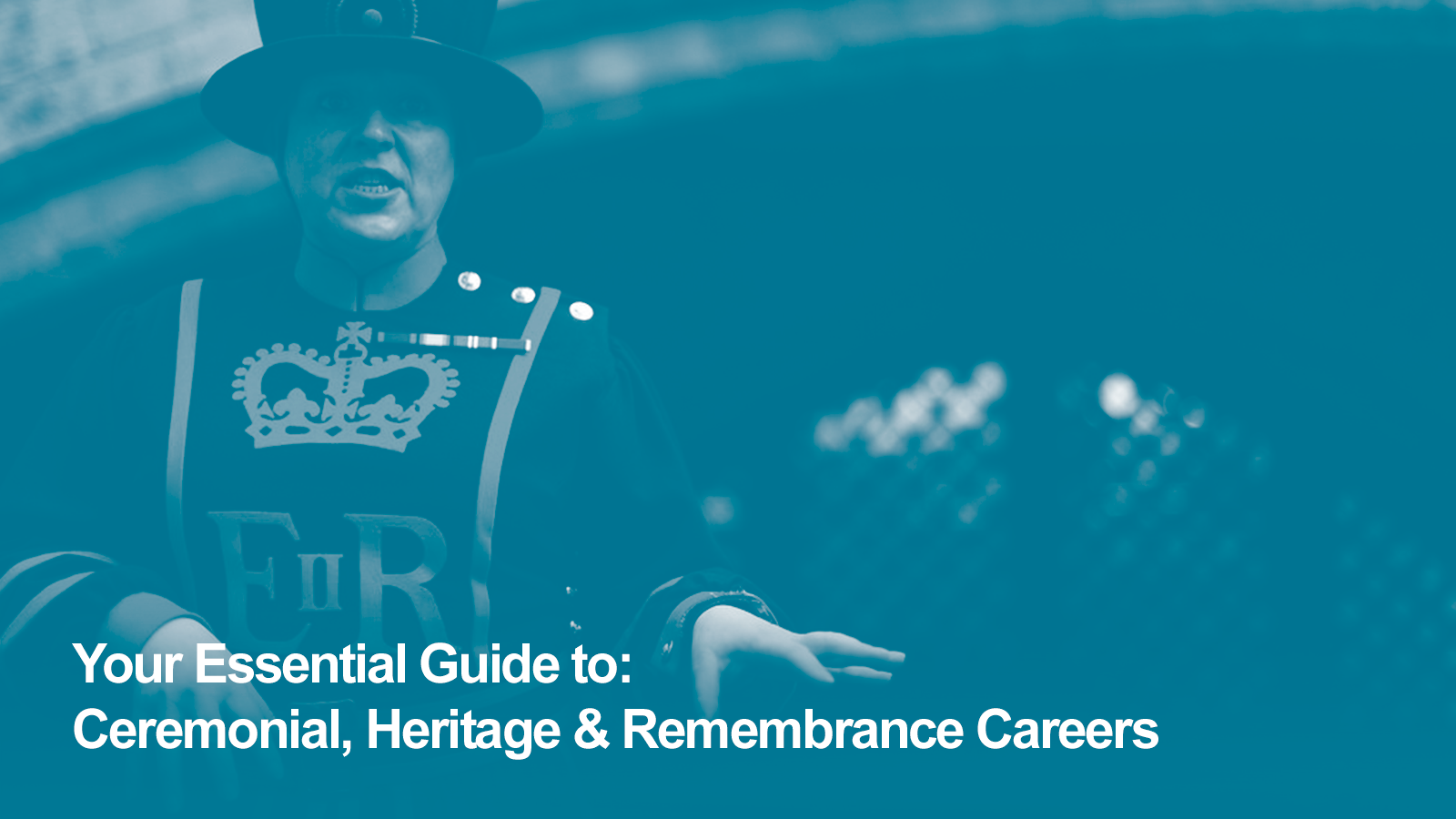
Example job titles: Yeoman Warder (Tower of London), ceremonial officer, usher/doorkeeper roles, civic marshal, ceremonial events coordinator, parliamentary or civic ceremonial support.
Typical responsibilities: Visitor engagement and guided interpretation; supporting ceremonies; stewarding VIP movements; applying security and access rules; working with event teams; maintaining uniform and presentation standards; delivering a calm public presence.
Typical entry level: Often requires strong personal credibility, a clean professional record, and evidence of disciplined service. Some roles are competitive and may require a specific background, strong communication skills, and the ability to work variable hours including weekends and public holidays.
B) Heritage operations, visitor experience and site management routes
What these roles involve: Running the “engine room” of heritage sites: visitor operations, facilities, contractors, safety, customer service, and compliance.
Example job titles: Visitor services assistant/supervisor/manager, duty manager, operations manager, facilities coordinator, estates officer, site coordinator, venue operations supervisor.
Typical responsibilities: Opening/closing sites; managing visitor flow; incident response; staff supervision; contractor control; basic security processes; health and safety compliance; safeguarding; reporting and KPI management.
Typical entry level: Entry is realistic without a degree, particularly for visitor operations. Progression often depends on supervisory experience, H&S competence, and evidence of running safe, customer-facing operations.
C) Remembrance, military heritage and interpretation routes
What these roles involve: Researching and presenting military history, supporting commemorations, guiding visitors, and producing content that helps the public understand service and sacrifice.
Example job titles: Heritage guide, interpreter, learning/education officer, engagement officer, remembrance project officer, memorial site guide, content/editorial assistant (heritage), outreach officer.
Typical responsibilities: Researching service stories; delivering tours and talks; supporting educational visits; writing interpretive content; supporting commemorative events; working with families, veterans and stakeholders; basic media/content creation.
Typical entry level: Often requires strong communication skills and demonstrable interest in history and remembrance. Some roles are seasonal or fixed-term, which can be a sensible entry route. For example, Cobseo recently advertised a CWGC Foundation guide placement in France (temporary, 90 days) involving tours, research and content creation, with accommodation provided.
Relevant Pathfinder hub: Explore Potential Resettlement Career Paths, Professions and Trades
D) Specialist professional routes (collections, conservation, policy, governance)
What these roles involve: More specialist heritage work, typically requiring formal qualifications and experience: collections, conservation, archives, curatorial work, heritage policy, and listed building/heritage planning roles.
Example job titles: Heritage officer (historic buildings), curator, conservator, collections manager, archivist, heritage project manager, heritage policy officer.
Typical responsibilities: Managing collections and documentation; conservation planning; grant funding and project delivery; stakeholder management; compliance with heritage legislation and standards.
Typical entry level: Often degree-led (or supported by relevant professional training), but veterans can enter via operational roles first, then build qualifications while working. The National Careers Service profile for heritage officer indicates a broad salary range and describes the role as supporting the care of culturally important places.
3. Skills and Qualifications Required
Transferable Military Skills
Leadership: Even in junior leadership roles, you will have experience setting standards, supervising teams, mentoring new joiners, and making decisions under time pressure. In ceremonial and heritage settings this translates into calm authority, consistency, and professionalism.
Operational planning: Event days, commemorations and VIP visits rely on careful planning and coordination. Your experience with orders, timings, rehearsals, contingency planning and coordination is directly relevant.
Risk management: Public sites and ceremonial events involve crowds, vulnerable people, safeguarding, fire safety, and incident response. Military risk assessment habits map well into heritage operations and venue management.
Discipline and reliability: These employers value people who turn up, meet standards every day, and can be trusted in public-facing roles where reputational risk matters.
Security clearance (where relevant): Some roles in government estates, royal/parliamentary settings, and sensitive remembrance organisations may require vetting. While a previous clearance does not automatically transfer, familiarity with security culture and procedures is an advantage.
Technical or logistical expertise: If you have managed stores, transport, estates, equipment, compliance, or maintenance schedules, you can target operations, facilities and site management routes rather than solely “front-of-house” roles.
Civilian Qualifications and Certifications
Mandatory qualifications: Many roles have no mandatory qualification beyond employability requirements (right to work, vetting, relevant driving licence where needed). However, specialist roles may require degrees or professional recognition.
Professional bodies and memberships: Depending on direction, you may find value in bodies linked to facilities management, heritage, museums, archives, or project management. Membership can help with CPD and networks, particularly if you are aiming for management roles.
Licences and accreditation: If the route includes security functions, an SIA licence may be required for certain contracted security roles (this varies by post). For operational site roles, first aid certification is commonly requested. For guide/interpretation roles, training is often provided in-house, but evidence of public speaking and research capability helps.
Apprenticeships and retraining routes: Operational and facilities roles can be accessed through employer training and apprenticeships, especially in visitor operations, facilities support and estates teams. This can suit those who want paid work while building qualifications.
Degree requirements: More specialist heritage routes (heritage officer, curatorial, conservation, archives) often expect a degree and/or specialist postgraduate training. A practical pathway is to enter via operations/visitor experience, then build formal credentials part-time.
Relevant Pathfinder resources you can link to in-service planning and skills translation:
- Understand the Five Stages of Resettlement
- How to Create a Strong Civilian-Friendly CV for Military Service Leavers
- Education and Training Funding Options for UK Veterans
4. Salary Expectations in the UK
Pay varies widely because this “career path” spans public institutions, charities, heritage operators and specialist professional roles. The ranges below are indicative and depend on location, employer type, and seniority.
- Entry-level (approx. £20,000–£28,000): visitor services assistants, entry-level operations support, basic heritage administration, seasonal site roles. Visitor assistant roles are commonly in the low-to-mid £20k range.
- Mid-level (approx. £28,000–£45,000): visitor services supervisors/managers, site operations managers, engagement/education officers, heritage project officers. The National Careers Service lists heritage officer salaries from around £25,000 (starter) up to around £48,000 (experienced).
- Senior/leadership (approx. £45,000–£80,000+): heads of operations, senior heritage managers, senior policy roles, and high-responsibility ceremonial/protocol appointments. Some rare parliamentary ceremonial roles can sit higher (for example, national reporting on Black Rod recruitment has cited a six-figure range).
Role-specific examples (where public information is available): Some recruitment sources have published an approximate starting salary for Yeoman Warders of around £28,810 basic, rising to around £34,000 with allowances. A separate listing has cited “circa £36,000 (inclusive)” for a Yeoman Warder vacancy. Use these as a guide only, and confirm on the live vacancy when applying.
Regional variation: London and the South East can pay more in headline salary, but roles may be competitive and cost of living is higher. Many heritage roles are clustered around major cities, tourist centres and key historic estates.
Public vs charity vs commercial: Some charities and smaller heritage organisations pay less than comparable public bodies. Conversely, venue/visitor operations in larger commercial heritage organisations can pay more than small local museums.
Contract vs permanent: Seasonal and fixed-term roles (including overseas summer programmes) may be paid hourly and may include accommodation. These can be sensible stepping-stone roles into longer-term heritage careers.
Sources: National Careers Service (heritage officer salary range): nationalcareers.service.gov.uk. Yeoman Warder pay example: royalarmouredcorps.org.uk. Black Rod pay range reported: economist.com.
5. Career Progression
Progression in this field is usually built through credibility, consistency, and evidence you can handle responsibility in public-facing and/or operational environments.
Typical ladder: Many people start in visitor services, guiding, or operations support, move into supervisory roles, then into site/venue management. Others enter via remembrance engagement roles and move into programme management, education leadership or stakeholder roles.
Timeframes: A realistic pattern is 12–24 months to move from entry-level to supervisor (if you perform well and take on responsibility), and 3–5 years into manager-level roles. Specialist professional routes can take longer due to qualification requirements.
Lateral moves:
- Front-of-house / guiding → learning & education, interpretation, content roles
- Visitor operations → facilities, estates, safety and compliance roles
- Remembrance engagement → programme management, stakeholder partnerships, fundraising operations
- Operations management → broader public-sector estates or venue operations roles
How veterans can accelerate progression: Veterans often progress faster when they translate responsibilities into outcomes (safety performance, incident response, standards, team performance), volunteer for duty management responsibilities, and formalise skills with targeted qualifications (first aid, H&S, project management, safeguarding training, or facilities-related training).
6. Transitioning from the Armed Forces into civilian Ceremonial, Heritage & Remembrance Roles roles
Translating rank into civilian job level: Avoid mapping rank directly onto job titles. Instead, describe scope: size of team, type of risk, complexity, budget/equipment responsibility, and stakeholder environment. “Shift/duty manager” or “operations supervisor” is often a better match than “manager” if you are moving into a new sector.
Common CV mistakes:
- Overloading with acronyms and unit detail that civilian hiring managers do not understand.
- Listing duties rather than outcomes (safety, service quality, incident handling, improvements, visitor/customer metrics).
- Not demonstrating communication skills. These roles often involve public engagement, difficult conversations, and formal presentation.
If helpful, link readers to: How to Create a Strong Civilian-Friendly CV for Military Service Leavers and the wider resettlement hubs: Five Stages of Resettlement.
Cultural differences: Heritage and remembrance organisations can be values-driven and consensus-led. Decision-making may feel slower than the military, but standards still matter. The key adjustment is learning how influence works without rank: relationship-building, written proposals, and stakeholder management.
Networking approaches: This is a relationship sector. Practical routes include volunteering at local museums/memorial sites, joining veteran heritage networks, attending open days, and connecting with staff on LinkedIn who work in visitor experience, learning, estates or commemoration.
Using resettlement time effectively: Use your resettlement window to (1) validate which route you want (operations vs guiding vs specialist), (2) gain one or two “unlock” qualifications (first aid, basic H&S, safeguarding awareness, or a short visitor experience/venue operations course), and (3) build evidence (volunteering, short placements, or seasonal work).
7. What To Do at Each Resettlement Stage
These actions align well with Pathfinder’s five-stage approach. If you want a structured overview, link to: Understand the Five Stages of Resettlement.
Awareness (24–18 months before leaving)
- Decide which route fits you: ceremonial/protocol, site operations, remembrance engagement, or specialist heritage.
- Start visiting sites and speaking to staff informally to understand the reality of the work.
- List your strongest transferable evidence: standards, public duties, duty management, incident response, training delivery.
Planning (18–12 months before leaving)
- Identify any gaps: public-facing experience, safeguarding awareness, H&S, or sector knowledge.
- Use education funding planning to target relevant short courses (avoid collecting certificates without a job target).
- Start building a small portfolio: talks delivered, training delivered, events supported, or a writing sample if targeting interpretation roles.
Activation (12–6 months before leaving)
- Build a civilian CV and LinkedIn profile that speaks to visitor operations and public-facing responsibility.
- Apply for seasonal roles and fixed-term programmes to gain sector credibility.
- Speak to recruiters and hiring managers about what they consider “essential” vs “nice to have”.
Execution (6–0 months before leaving)
- Target specific employers (historic estates, museums, remembrance charities, local authorities).
- Prepare for interviews using STAR examples focused on customer/public safety, standards, teamwork, and incident handling.
- Be clear on working patterns (weekends, public holidays, early starts) and whether you can relocate.
Integration (0–12 months after leaving)
- Settle in, learn the culture, and build a reputation for reliability and calm competence.
- Ask early about progression routes: duty management, supervisor roles, learning/education pathways, or operations leadership.
- Choose one development priority that supports your next step (e.g., a recognised H&S certificate, facilities training, or a project management qualification).
8. Is This Career Path Right for You?
Who is likely to thrive: People who value standards, tradition and public service; those comfortable being visible and representing an organisation; those who can handle the public with patience; and those who are steady under pressure and can apply rules consistently without escalating situations.
Who may struggle: Those who dislike routine, public scrutiny, or customer-facing work; people who want rapid promotion without building sector credibility; and those who find it hard to operate without clear hierarchy or who become frustrated by slower, stakeholder-led decision-making.
Helpful traits and preferences:
- Attention to detail and presentation
- Strong interpersonal skills and emotional control
- Comfort with protocols and consistent rule application
- Genuine interest in history, remembrance, heritage or public institutions
- Practical mindset for operational roles (safety, facilities, planning)
Conclusion: Ceremonial, heritage and remembrance roles can offer a realistic and purposeful second career for service leavers, veterans and ex-military professionals who want to stay close to public service, history and institutional standards. If the direction suits you, explore the routes early, build sector evidence through seasonal roles or volunteering, and focus your training on the qualifications that unlock the next step.