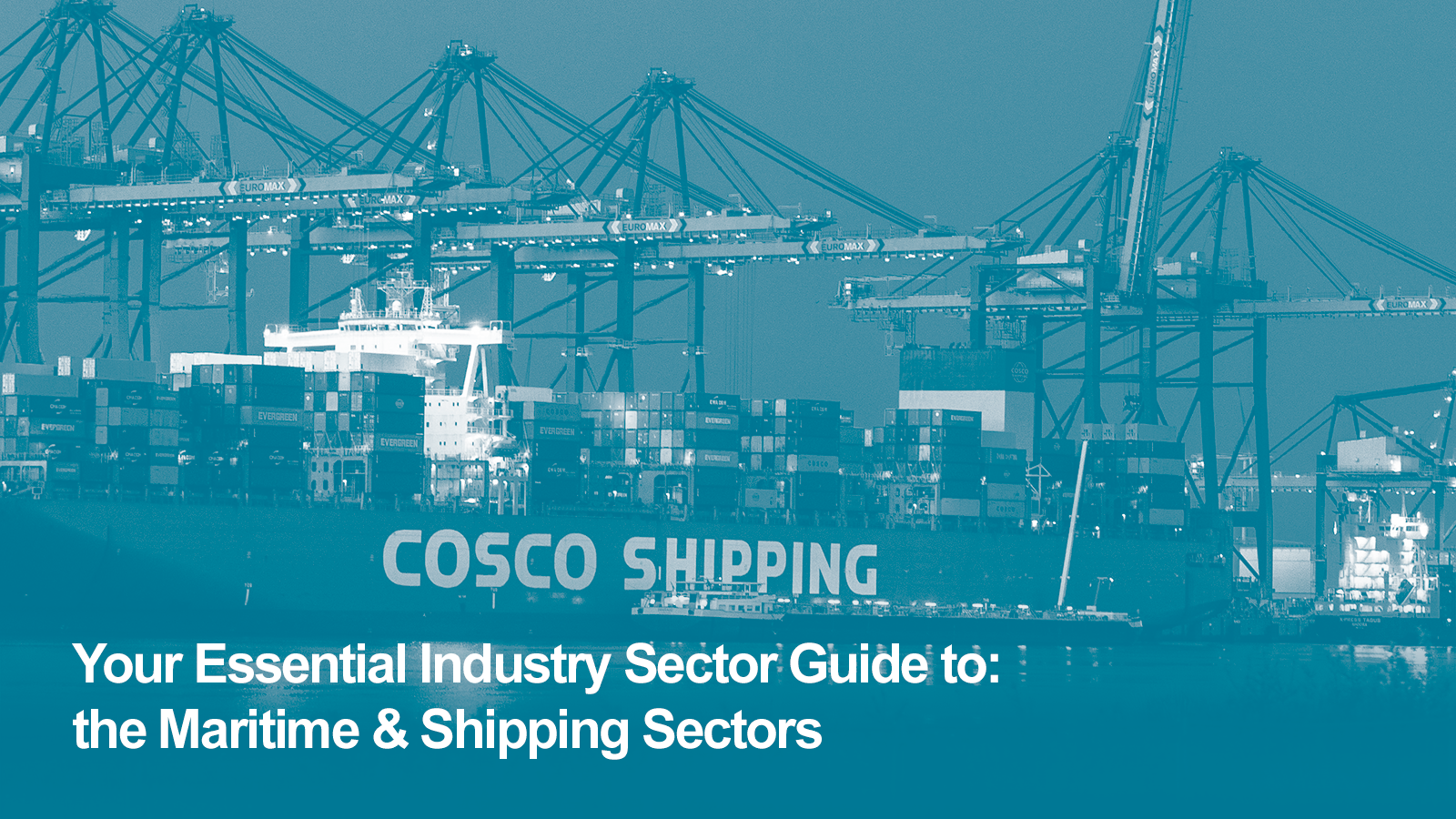
Maritime & shipping jobs for service leavers cover a wide spread of shore-based and seagoing work: ports and terminals, vessel operations, marine services, ship management, offshore support, marine engineering, and the commercial and professional services that sit behind global trade. For veterans and ex-military candidates, the sector often values operational discipline, safety culture, and accountable decision-making – but it also has specific licences, medicals, and competence frameworks that you need to plan for early.
This is an industry overview. It focuses on how the UK maritime and shipping sector is structured, where jobs sit, how hiring works, and what “entry” realistically looks like. For deeper guidance on individual professions, use the related Pathfinder Career Path hubs linked throughout.
1. Sector Overview
In the UK, “maritime” and “shipping” commonly includes merchant shipping (deep sea, short sea, ferries and cruise), ports and harbour operations, marine services (towage, pilotage, mooring, vessel traffic services), and the supply chain and specialist services that enable vessels and cargo to move safely and efficiently. Government oversight includes the Maritime and Coastguard Agency (MCA), which sets requirements and guidance for seafarer training, certification and examinations. (MCA seafarer training and certification)
 |
Get weekly jobs and transition advice. Unsubscribe anytime. |
Organisations range from large port groups, ferry operators and global shipping companies, through to SMEs in marine engineering, ship repair, crewing, ship agency, surveying, and maritime training. You will also see regulators and public bodies (for example harbour authorities) alongside contractors delivering engineering, maintenance, security, IT and infrastructure programmes. A practical way to understand the breadth of UK ports is the British Ports Association’s UK Ports Directory. (UK Ports Directory 2024/25)
UK activity clusters around port regions (for example the Solent, Thames corridor, Felixstowe/Harwich, Humber/Tees, Mersey, Bristol Channel, and Scottish ports). Working patterns vary by sub-sector: ports and towage are often shift-based; vessel roles can involve time away; shore-based commercial and professional roles may be office or hybrid; and technical roles are usually site-based with travel between terminals, vessels, depots and contractor sites.
2. Where Jobs Sit in This Sector
Port, Terminal and Harbour Operations (Frontline delivery / operations)
This is the throughput engine: berthing and turnaround, cargo and passenger operations, yard and gate activity, and day-to-day coordination with hauliers, rail, warehouses and shipping agents. The focus is safe throughput, productivity, and predictable handovers.
Example job titles (3–6): Port operative/stevedore, terminal operations supervisor, yard planner, quay crane operator, passenger operations officer, port operations manager.
Career Paths it connects to: Logistics & Transport; Operations & Project Management; Facilities, Maintenance & Utilities.
Working pattern reality: National Careers Service notes port operative roles commonly involve shifts (days/nights/weekends) and gives a typical salary range. (National Careers Service – Port operative)
Vessel Operations and Marine Services
This covers work that supports vessel movements and navigation safety: towage, pilotage, mooring, harbour master functions, and vessel traffic services (VTS). It is safety-critical, procedural, and competency-led, with clear escalation routes during incidents and adverse conditions.
Example job titles (3–6): VTS operator, marine officer, mooring operative, tug deckhand, deputy harbour master, marine services manager.
Career Paths it connects to: Defence & Security; Health, Safety & Environment; Operations & Project Management.
Engineering, Maintenance and Technical Assurance
This is the reliability layer: maintaining port equipment (cranes, RTGs, reach stackers), electrical systems, marine plant, fixed infrastructure, and sometimes vessel maintenance for operators and ship managers. Assurance activities (inspection, planned maintenance, fault diagnosis, compliance evidence) are central, and permit-to-work culture is common.
Example job titles (3–6): Marine engineer, electrical technician, maintenance planner, reliability engineer, port engineer, marine surveyor.
Career Paths it connects to: Engineering & Technical; Facilities, Maintenance & Utilities; Health, Safety & Environment.
Commercial, Agency and Customer-Facing Trade
This is where the sector wins and retains business: shipping agency, customer operations, service performance, trade compliance support, and account relationships. Work is deadline-driven (vessel windows, customs processes, perishable cargo, passenger services) and rewards accuracy, calm under time pressure, and strong communication.
Example job titles (3–6): Shipping agent, customer service coordinator, key account manager, chartering assistant, freight operations coordinator, trade support coordinator.
Career Paths it connects to: Logistics & Transport; Finance & Professional Services; HR & People Management (for people-facing operational HR roles).
Compliance, Safety, Environment and Security (Compliance / governance / risk / assurance)
This is the controls layer: safety management systems, audits, incident investigation, environmental compliance, security regimes and access controls. Depending on the site, you may see formal security standards (for example ISPS at port facilities) and a strong emphasis on evidence and documentation.
Example job titles (3–6): HSE advisor, environmental compliance officer, port security officer, quality auditor, risk & assurance manager, incident investigator.
Career Paths it connects to: Health, Safety & Environment; Defence & Security; Operations & Project Management.
Corporate and Enabling Functions
Ports, ship managers and marine services firms need the same backbone as any asset-heavy, regulated employer: finance, HR, procurement, legal, IT, communications, and data. In maritime, these functions are often closely tied to operations because of safety, labour, contractual and compliance demands.
Example job titles (3–6): Finance business partner, HR advisor, procurement specialist, contract manager, IT service manager, communications officer.
Career Paths it connects to: Finance & Accountancy; HR & People Management; IT, Cyber & Data.
3. Employer Landscape and Hiring Channels
What employers tend to value: a credible safety mindset, reliability, clear communication, and the ability to work within regulated systems without cutting corners. For safety-critical roles, employers look for calm judgement, procedural discipline, and evidence that you can perform consistently on shift. For commercial roles, accuracy, ownership and stakeholder handling matter as much as sector knowledge.
Understanding “who hires”: the UK includes major port groups, terminal operators, ferry operators, towage and marine services firms, ship management and crewing companies, offshore support operators, ship repair yards, marine engineering companies, and professional services. If you want a quick starting list of major port employers, the UK Major Ports Group lists member organisations. (UK Major Ports Group – members)
Common hiring routes in practice:
- Direct to employer (ports, terminals, ferry operators, towage, ship managers).
- Contractors and supply chains for engineering, maintenance, construction, IT and security work (often the fastest route into a site).
- Agencies for operational peaks, specialist technical roles and interim compliance posts (varies heavily by port and region).
- Trade bodies and sector networks (useful for employer discovery and events). The UK Chamber of Shipping and the Merchant Navy Training Board sit in this ecosystem. (UK Chamber of Shipping)
What “entry-level” really means here: it differs by sub-sector. In ports, it may mean trainee operative roles with structured competency sign-off and shift work. In seafaring, “entry” often means a formal training route with medical standards and mandated training. In shore-based commercial services, entry can mean junior coordinator roles where your advantage is discipline, accuracy and stakeholder handling — with maritime knowledge learned quickly once you are in.
4. Skills and Qualifications That Matter in This Sector
Transferable Military Strengths (Sector-Relevant)
- Planning and operational discipline: ports and vessel operations run on sequencing, timings and reliable handovers. Translate your experience into planning cycles, control measures, and delivery under constraints.
- Safety, risk and compliance mindset: maritime work is built around safe systems of work, permit-to-work, audits and incident learning. Employers respond well to evidence-based safety leadership, not generic claims.
- Stakeholder management: you will deal with ship masters, pilots, tug crews, terminal teams, hauliers, rail operators, customers, regulators and local stakeholders. Calm escalation and clear communication are highly practical strengths.
- Leadership and teamwork: shift-based environments need leaders who can brief well, manage fatigue, uphold standards, and handle performance issues fairly.
- Working in regulated environments: familiarity with inspections, assurance, and “prove it” documentation transfers strongly into HSE, compliance, and operational governance roles.
- Security clearance (where relevant): for some defence-linked maritime employers, prior clearance can be helpful, but most sites will apply role-appropriate screening and access controls.
Typical Civilian Requirements
Do not try to collect every certificate. Focus on what unlocks entry for your chosen part of the sector:
- Licences/tickets: plant, lifting, banksman/slinger, confined spaces, and site safety tickets are common in port and engineering environments (varies by employer).
- Seafarer training and certification: if you are going to sea, use the MCA’s seafarer training and certification collection as your starting point for Certificates of Competency (CoC) and related requirements. (MCA – seafarer training and certification)
- Mandatory safety training norms: for seafarers, STCW-related safety training is governed by UK requirements and guidance (your exact route depends on role and route to sea). (STCW training and certification guidance (UK))
- Professional memberships (where relevant): membership can help credibility and networking (engineering, logistics, safety, shipping), but it is not always required at entry level.
- Vetting and access controls: expect identity checks, references and screening appropriate to the site and role, especially in controlled port environments.
5. Salary and Contracting Reality in This Sector
Salaries vary widely because the sector mixes shift-based operations, skilled engineering, and commercial/professional services. Total pay is often influenced by shift patterns, overtime, scarcity of skills, and site/location factors.
- Entry-level / operational roles: port operative roles often start in the mid-£20,000s with progression as competence increases, and with shift premiums where applicable. National Careers Service indicates £24,000 starter to £31,000 experienced for port operatives. (National Careers Service – Port operative)
- Skilled / specialist roles: engineering, maintenance planning, technical assurance and specialist marine services can move into higher ranges depending on discipline, shift/on-call, and whether the work supports high-intensity operations or offshore activity.
- Leadership / management roles: terminal operations leadership, marine services management, HSE leadership, and commercial leadership vary significantly by employer scale and risk profile (major ports versus smaller harbours; national operators versus local firms).
Contract vs permanent: permanent employment is common in ports, ferry operators, and many shore-based roles. Contracting is more prevalent in project work (infrastructure upgrades), specialist engineering, interim HSE/assurance, and consulting. Some offshore roles use rotational patterns that can feel “contract-like” even when employed.
Allowances and shift patterns: overtime, nights/weekends, call-out, travel and subsistence can materially affect total reward. Always clarify rota patterns, rest management, and how overtime is allocated and paid.
Why pay varies: the biggest drivers are safety-critical responsibility, scarce technical competence, shift intensity, location, and whether the employer runs a 24/7 operation with weather and vessel-window pressure.
6. How to Enter This Sector From the Armed Forces
Translate your experience into sector language: avoid rank translation. Lead with scope, controls and accountability. Employers respond well to statements such as:
- “Led a shift team delivering time-critical operations with formal safety and compliance controls”
- “Managed equipment readiness using planned maintenance, fault reporting and spares control”
- “Controlled risk using permits, audits, incident reporting and corrective actions”
- “Co-ordinated multiple stakeholders and ran clear escalation and handover processes”
Demonstrate sector fit quickly: maritime employers recognise evidence such as safety leadership examples, competence sign-off systems, maintenance documentation, incident learning, and strong handover discipline. If you have a Royal Navy/RFA background, be specific about what you did that matches the lane you are targeting (operations, engineering, safety/compliance, or commercial support).
Common barriers and how to overcome them:
- Tickets and medicals: if a role lists a must-have, treat it as a resettlement project: cost it, schedule it, and decide whether to target employers who train versus self-fund.
- “No maritime experience” filter: break it by entering through adjacent roles (port operations, maintenance planning, HSE support, contractor roles) then build sector credibility on-site.
- Location constraints: be realistic: many operational roles are tied to ports. If you cannot relocate, consider shore-based maritime services (IT, finance, HR, commercial operations) that may be in larger cities or regional offices.
- Seagoing routes: if your target is sea-going work, anchor your plan in MCA requirements and training availability, including lead times for courses and medicals. (MCA – seafarer training and certification)
Sector-specific networking strategy:
- Build a shortlist using major port and industry member lists, then map the contractor supply chain (engineering, security, facilities, IT) for each site. (UK Major Ports Group – members)
- On LinkedIn, follow port operators, terminal operators, towage firms, ferry operators, and marine engineering companies in your target region. Identify ops managers, engineering managers, HSE leads, and resourcing contacts.
- Use trade body activity to find events and safety initiatives (useful entry points for conversations). (UK Chamber of Shipping)
Practical first steps in resettlement time: pick one primary entry lane (operations, engineering, compliance, commercial) and one credible fallback. Then align training spend to the top 10 employers you can realistically commute to.
7. What To Do at Each Resettlement Stage (Sector Lens)
Awareness (24–18 months)
- Choose your target “lane”: port/terminal operations, marine services, engineering, compliance/HSE, or shore-based commercial support.
- Reality-check location, travel, and shift patterns for that lane.
- Start with Pathfinder’s sector hub to map what sits where in the industry: Maritime & Shipping sector hub.
Planning (18–12 months)
- Identify the 3–5 most common requirements in adverts for your lane (tickets, licences, medicals, security checks, competence evidence).
- Create an employer shortlist: port operators plus the contractors who actually deliver the work on-site.
- If you want seagoing roles, map the MCA route and training lead times early. (MCA seafarer training)
Activation (12–6 months)
- Position your CV for maritime: safety-critical operations, compliance evidence, shift delivery, equipment readiness, and stakeholder co-ordination.
- Use Pathfinder’s operations lens content to sharpen your examples (without generic CV padding): Operations & lean management.
- Register with a small number of relevant agencies used locally by ports and marine contractors (quality over quantity).
Execution (6–0 months)
- Prepare for practical scenario interviews: safety decision-making, incident response, prioritisation, fatigue management, and communications under pressure.
- Be ready for compliance checks and onboarding documentation, particularly for controlled sites.
- Negotiate with facts: rota, overtime rules, call-out, travel, and first-year development expectations.
Integration (0–12 months)
- Be easy to trust: consistent safety behaviour, strong handovers, and evidence-based reporting.
- Build cross-functional relationships early (ops, engineering, HSE, commercial) — ports reward people who can coordinate across the machine.
- Use sector-specific learning and networks to broaden opportunity; Pathfinder’s recruiter perspective is a useful reality-check: Recruiter’s view: operations and lean.
8. Is This Sector Right for You?
Who will thrive: people who like structured operations, clear standards, and practical problem-solving; those comfortable with shifts, weather exposure, and safety-critical routines; and those who can coordinate multiple stakeholders without needing constant supervision.
Who may struggle: people who need predictable hours, dislike formal compliance, or find rotating shifts and last-minute operational changes difficult. Some parts of the sector are commercially intense and deadline-driven; others are highly procedural and can feel slower.
Practical considerations: location is a real constraint for many operational roles. Family commitments and sleep patterns matter if shifts are involved. Some roles have physical demands (deck/terminal work), and many controlled sites require background checks and access controls.
9. Explore Roles by Career Path
Use these Pathfinder Career Paths to explore role detail and requirements in more depth. Each commonly connects into maritime and shipping employers in the UK.
- Logistics & Transport: ports sit inside wider UK supply chains and rely on disciplined scheduling, handovers and throughput control.
- Operations & Project Management: terminals and marine services depend on safe delivery, planning, and continuous improvement.
- Engineering & Technical: marine engineering, port plant, electrical and maintenance roles underpin reliability and safety.
- Facilities, Maintenance & Utilities: ports are complex estates with infrastructure, access control, and 24/7 maintenance demands.
- Health, Safety & Environment: safety systems, audits, incident learning and environmental compliance are central to daily operations.
- IT, Cyber & Data: port community systems, planning tools, security systems and operational tech need reliable digital capability.
- HR & People Management: shift workforces, competence frameworks and safety culture require strong people processes.
- Finance & Accountancy: asset-heavy operations rely on strong cost control, contracting, and governance.
- Defence & Security: maritime security, port security, and defence-linked employers value operational discipline and assurance.
Internal link note: If you want the Career Path view specifically for maritime, see: Maritime & Shipping Career Path hub.